

The Short Answer: An emergency AC repair is needed when your air conditioner stops cooling during extreme heat, is making strange loud noises, trips a circuit breaker that won’t reset, or shows signs of a refrigerant leak. Call an HVAC company with 24/7 availability right away, and in the meantime, shut the system off, move to the coolest part of your home, and stay hydrated.
This guide walks you through what counts as an HVAC emergency, what you can safely do before a technician arrives, and how to pick a repair service that will show up when you need them.
What Counts as an Emergency AC Repair?
Not every AC issue is an emergency. A unit that runs a little warm on a cool day can probably wait until business hours, but when your AC quits in the middle of summer, it can stop being a comfort issue and becomes a safety one. Indoor temperatures can climb fast, and for kids, older adults, and pets, that can turn dangerous in a matter of hours.
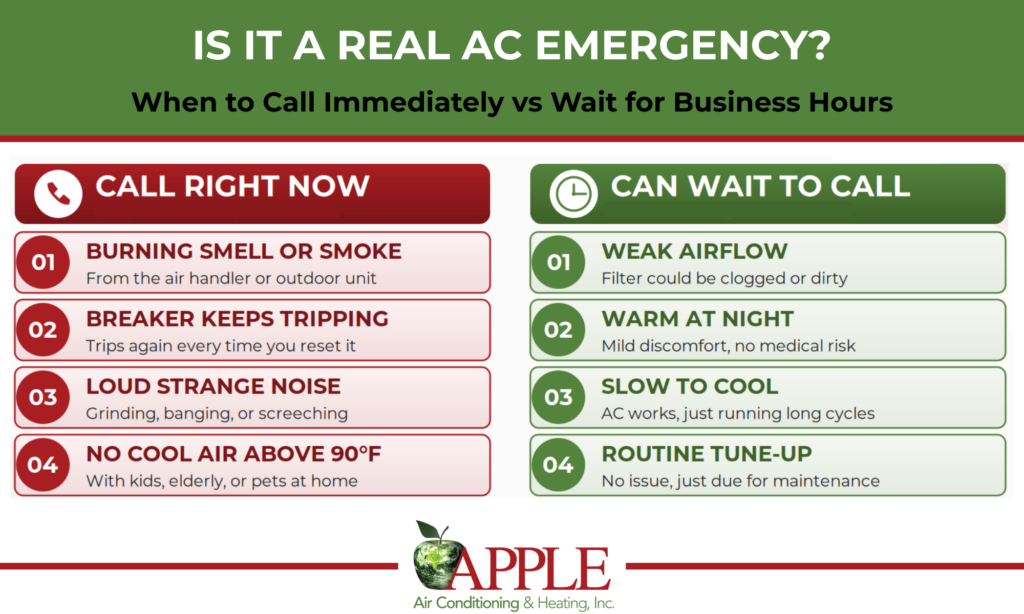
You have an HVAC emergency if:
- Your air conditioning has stopped working and outdoor temperatures are above 90°F
- You smell something burning or see smoke from the air handler or outdoor unit
- A circuit breaker keeps tripping every time you reset it
- You hear a loud strange noise (grinding, banging, screeching) from any part of the AC system
- Water is pouring from the indoor unit
- You suspect a refrigerant leak (hissing sounds, oily residue on the lines)
- Anyone in the home is medically vulnerable to heat (elderly, infants, people with heart or respiratory conditions)
The CDC notes that high indoor temperatures can quickly cause heat exhaustion or heat stroke, especially in people 65 and older or those with chronic conditions. If you’re unsure whether to call, lean toward calling. A reputable HVAC company would rather make the trip and find a small fix than have you wait through a heat wave with no cool air.
Warnings That Often Get Ignored
Some signs of trouble look minor at first, but quickly become costly repairs if you wait. Watch for these:
- A heat pump that runs but blows warm air on a hot day
- Unusual smells from the vents (musty, sweet, or chemical)
- A new vibration or rattle in the outdoor unit
- Energy bills jumping for no clear reason
- Indoor humidity that won’t drop even with the system running
What to Do Before Help Arrives
A few smart moves can keep your home safer and prevent a small problem from becoming a big repair bill.
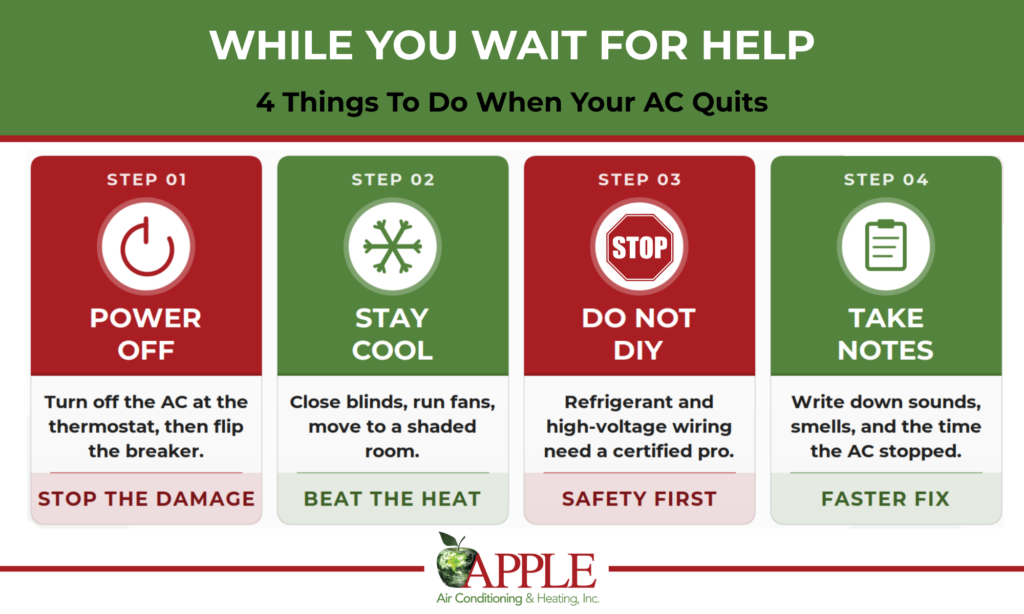
1. Turn the System Off
If you smell burning, see smoke, or hear grinding, turn the AC off at the thermostat first, then flip the circuit breaker. Running a failing system for even a few more minutes can damage the compressor or start a fire.
2. Cool Yourself and Your Home
- Close blinds and curtains on sun-facing windows
- Run ceiling fans on the “cool” direction (counterclockwise looking up)
- Move to the coolest room in the house, usually a lower floor on the shaded side
- Drink cold water often and avoid heavy meals or alcohol
3. Don’t DIY Refrigerant or Electrical Issues
Federal law requires a Section 608 certified technician to handle refrigerant. Wiring inside an AC unit also runs at voltages that can hurt or kill you. A professional technician has the tools, training, and parts to handle these safely.
4. Document What’s Happening
Note the time the system stopped, any sounds or smells, and what was set on the thermostat. This helps the technician diagnose faster, which can save you money on the entire process and shorten your service call.
Common Causes of an AC Emergency
Knowing the likely cause helps you describe the issue clearly when you call. Most emergency calls trace back to one of these:
| Cause | Warning Signs | DIY or Pro? |
| Tripped circuit breaker | Outdoor unit silent, indoor blower running | DIY first try, then pro if it trips again |
| Refrigerant leak | Hissing, ice on lines, warm air | Pro only |
| Failed capacitor | Outdoor fan won’t start, humming sound | Pro |
| Compressor failure | Loud bang, total shutoff | Pro |
| Frozen evaporator coil | Warm air, ice on indoor lines | Turn off and thaw, then call pro |
| Clogged condensate drain | Water around indoor unit | DIY first try, then pro |
| Dirty air filter | Weak airflow, system running constantly | DIY (replace filter) |
A clogged air filter or a stuck thermostat can sometimes look like an emergency but is fixable in five minutes. Refrigerant leaks, capacitor failures, and bad compressors always need an experienced technician with the right gauges and parts.
Heating System Emergencies Count Too
Summer heat gets most of the attention, but cold snaps each year can drive emergency heating calls. A failed heat pump or furnace repair on a 35-degree night is just as urgent as a broken AC in summer, especially for households with infants or older adults. The same HVAC company that handles your emergency AC should also be ready for emergency heating, including gas furnaces, electric heat strips, and heat pump systems.
How to Pick the Right Emergency Repair Service
When you’re hot and panicking, it’s tempting to go with the first HVAC company that answers. A few minutes of vetting can save you from a bad experience.
Look for:
- 24/7 availability with real people answering the phone instead of an answering service
- A licensed Florida Mechanical Contractor. Apple AC‘s license is #CMC056836
- NATE-certified technicians trained on real-world HVAC systems
- Local reviews from people in your area with consistent customer satisfaction across years of service
- Upfront pricing so you’re not surprised by an after-hours rate
- Background-checked technicians who arrive in a uniform with ID
Beware of any repair service that won’t quote a service call fee over the phone, pushes a full system replacement before diagnosing, or asks for cash up front.
Pro Tip: Customers on a maintenance agreement get priority service when emergency calls flood in. That can mean the difference between a same-day fix and waiting three days. The plan often pays for itself in a single after-hours call.
Why Local Matters
A national chain can take hours to dispatch a truck during peak season. A locally based HVAC company in your surrounding area already has trucks staged nearby and parts on the shelf. That means shorter wait times, faster fixes, and a real person you can call if any other issues arise. Apple AC has been serving counties in Central Florida since 1997, with a fully stocked warehouse so most repairs are finished in one visit.
How to Prevent the Next Emergency
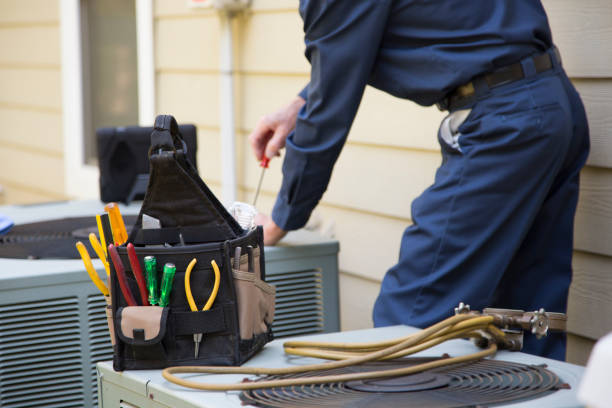
Most AC emergencies are not random. They are small problems that grew because no one caught them. A little routine maintenance goes a long way.
The U.S. Department of Energy recommends yearly professional inspections to keep your cooling system running at peak energy efficiency and to catch wear before it becomes failure. A neglected AC unit can lose 5% of its efficiency every year it skips a tune-up, which leads to higher bills and shorter equipment life.
How To Extend the Life of Your AC
- Change air filters every 60 to 90 days, more often if you have pets
- Schedule regular maintenance in the spring before peak summer
- Keep the outdoor unit clear of grass clippings, leaves, and shrubs
- Watch for early warning signs like rising energy bills, weak airflow, or new noises
- Get a Maintenance Agreement that covers two preventative maintenance visits a year (one in spring, one in fall), priority scheduling on emergency calls, and a discount on parts and labor. Members usually skip the after-hours fee entirely.
Stay Cool in Central Florida
When your AC quits during a Florida summer, every hour matters. The fastest way out of an HVAC emergency is to shut the system off, get to a cool space, and call a local repair service that has the trucks, parts, and experienced technicians to fix it the same day.
Apple AC has been delivering reliable emergency air conditioning service across Central Florida since 1997. Our family-run team offers 24/7 emergency HVAC service and NATE-certified technicians, with a fully stocked warehouse so most repairs finish in one visit. We handle emergency AC repair services, new installations, commercial HVAC projects, and indoor air quality upgrades across Central Florida. Need help right now? Schedule service or request an estimate and a real person will get back to you fast.