

The Short Answer: A standard AC installation runs 4 to 8 hours when the existing system, ductwork, and electrical are in good shape. Bigger projects that involve new ductwork, electrical upgrades, or a full furnace and AC swap can stretch to a full day or 2 to 3 days.
Few projects affect day-to-day comfort like a new air conditioner. Once the system is picked and the contract is signed, most homeowners want one thing: a clear answer on how long the install will take. It depends on the system being installed, the condition of the existing system, and a handful of other variables that only become obvious once the install starts. This guide gives you a realistic installation timeline by job type, the variables that move the clock, and what a fair AC installation looks like.
Installation Timeline by Job Type
Most residential AC installations land in one of five buckets. Here is what each one typically looks like:
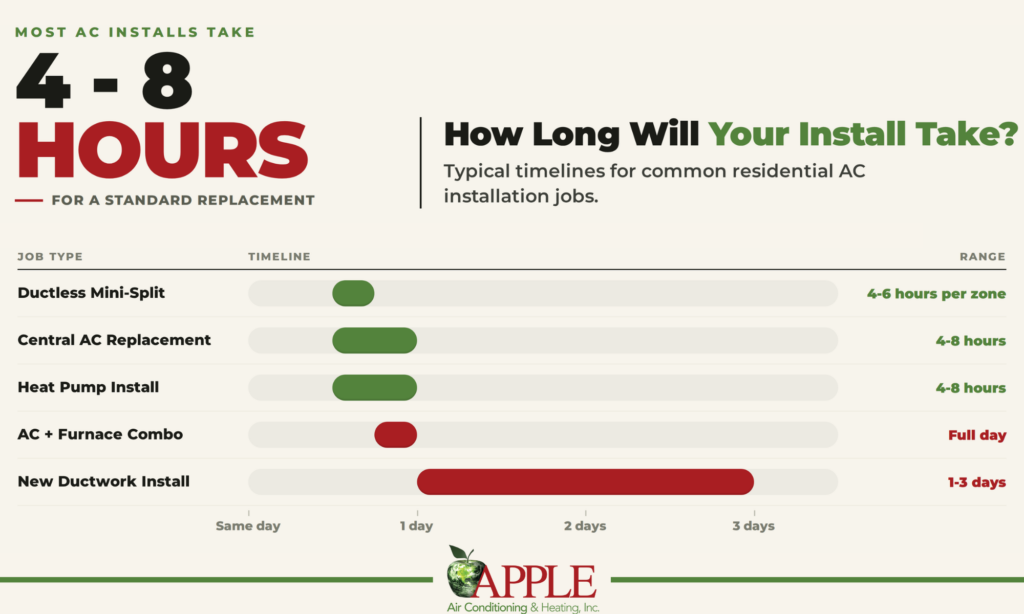
A straight changeout where the new air conditioner matches the old unit in size is typically the fastest job. New construction, retrofits with no existing ductwork, and full system redesigns take longer. Overall, most installs land in the 4 to 8 hour window.
The Variables That Move the Clock
Two homes with the exact same new system can finish hours apart, and the reason is usually other main factors stacking up.
Existing ductwork is the single biggest one. A home with ductwork in good shape can go from old system to new system in a single workday. Without it, extensive ductwork installation alone adds 1 to 4 days of additional time on top of the equipment install. Square footage of the home also matters, since a 1,200 square foot home and a 3,500 square foot home need different system sizes, refrigerant lines, and airflow setups.
Electrical work is the quiet time-eater. A new system often needs upgraded electrical connections, a dedicated breaker, or sometimes a service panel update before the equipment can be powered on. Site access plays a role too, especially in older homes with tight attic clearances, second-story air handlers, or backyards with narrow gates. A clean site lets the crew move fast, but a cramped one slows everything down.
The shape of the existing system itself also determines timing. A clean removal beats fighting a corroded system. Energy efficiency upgrades, like advanced thermostats, two-stage compressors, or zoning controls, also add testing time. Each of these can add anywhere from 30 minutes to half a day on top of the base 4 to 8 hour window. Correct sizing and a matched indoor unit pay off later in lower energy consumption and lower energy bills, so the extra hour spent getting it correct protects your investment for years.
Pro Tip: Ask your HVAC contractor for a realistic installation timeline. A good company will give you a window that accounts for the parts of the job they cannot see until they get started.
From Arrival to Walkthrough
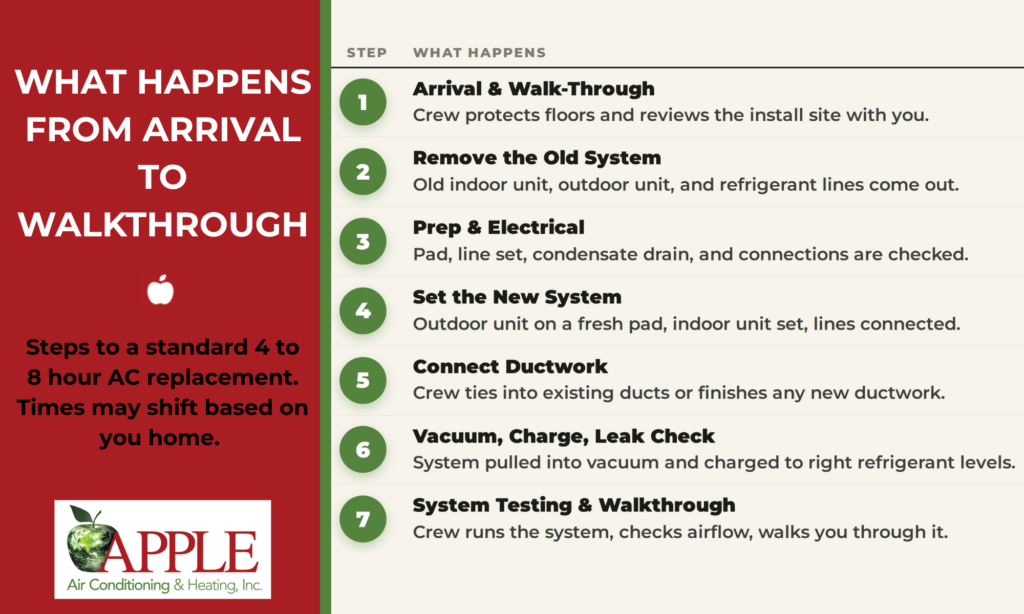
A seasoned technician arrives, the crew protects floors, reviews the installation site with you, and confirms the plan. The old system comes out first, which means the old indoor unit, outdoor unit, and refrigerant lines get removed. Refrigerant is recovered, not vented.
Prep work is the bridge between old and new. The pad gets cleaned or replaced, the line set is checked or swapped, the condensate drain is cleared, and any required electrical work happens before the new equipment goes in. Then the new system gets set, with the outdoor unit on a fresh pad and the indoor unit tied into the ductwork. Refrigerant lines and electrical connections come together at the same time.
The last hour or two is what matters most for long-term performance. The crew pulls the system into a vacuum, leak-checks it, charges it to the right refrigerant levels, and runs full system testing on airflow, the thermostat, and operating pressures. Clear communication during this final stretch is what separates a good install from a rushed one. Experienced technicians explain what they are doing as they go instead of leaving you guessing.
Why Some Installs Take Longer
A few specific situations stretch the timeline past a single day, and none of them are red flags. They just need more time. Heavy ductwork rework, switching from a furnace setup to a heat pump (or the reverse), and new construction installs where the system goes in before drywall all run on the longer end. Older homes sometimes hide surprises, like undersized wiring or warped duct boots, that only show up once the old unit is out. Multi-zone ductless mini-split installs spread across several rooms add hours per zone, and combined AC and furnace installation on the same day usually takes a full workday on its own.
An emergency new AC unit install after a sudden compressor failure on an older system can also take longer than expected, since part availability drives the schedule more than labor does. If your project includes any of these, ask your HVAC contractor for a day-by-day plan up front so you know which day the house will be hottest and which day brings the system back online.
Choosing the Right HVAC Contractor
Picking the right contractor matters as much as the equipment itself. A good one usually checks these boxes:
- NATE-certified, experienced technicians who do residential AC installation every week
- A clear, written estimate that breaks out parts, labor, and ductwork separately
- Honest advice on whether a new system is the right call or an AC repair would do
- A strong warranty on both the new air conditioner and the labor
- Clear communication from quote through final system testing
The U.S. Department of Energy’s central air conditioning guide is a useful starting point for sizing and efficiency. The DOE’s ductless mini-split guide is worth reading if you are weighing a zoned system instead of central air.
Getting Your Home Ready
A little prep work shortens the job. The day before the install, clear a path from the driveway to the air handler and the outdoor unit, move furniture and personal items away from work zones, and plan for pets to be in a closed room away from the action. Confirm the time window, payment method, and the name and photo of the technician before they arrive. It saves everyone a step. Most installs are quieter than a repair call, but the team will be moving in and out of the house throughout the day.
A Smooth AC Installation, Done Right
Most air conditioner installation projects wrap up in 4 to 8 hours when the existing system, ductwork, and electrical are in good shape. Add in new ductwork, a heat pump conversion, or new construction and the timeline can stretch to 2 or 3 days. The right HVAC contractor sets clear expectations up front and stays in the loop with you.
Apple AC has installed new AC systems across Central Florida since 1997, guided by honesty, integrity, and commitment. Our NATE-certified team handles residential and commercial installs, AC replacements, heat pump and ductless mini-split installs, ductwork, and ongoing HVAC maintenance through our energy savings plan. New systems come with strong warranty coverage and flexible financing. Once the new cooling system is up and running, proper maintenance and add-ons like indoor air quality products keep it clean and efficient through Florida’s long cooling season.Ready to schedule a new AC installation or get a clear timeline for your home? Request a free in-home estimate, book service, or call Apple AC at 407-654-3777 to talk with an HVAC technician about your project.