

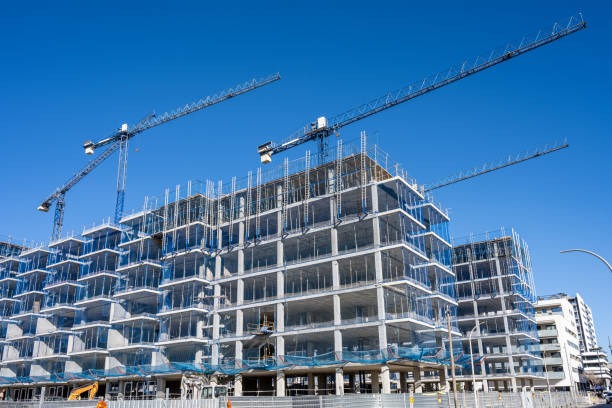
The Short Answer: A commercial HVAC system for new construction should be planned during the design phase, sized for the building’s real load, and matched to how the space will be used. Builders who bring in an HVAC professional early avoid expensive changes later and finish with better comfort and lower energy costs.
New commercial projects in Central Florida move fast, and the heating and cooling plan can make or break both the schedule and the budget. This guide walks Florida builders through how a commercial HVAC system differs from a residential one, which system types fit different buildings, how sizing and design work, and what to plan for once the doors open. Apple AC has run commercial new construction projects across the region since 1997, so the advice here reflects 30 years of job site experience.
How a Commercial HVAC System Differs From a Residential One
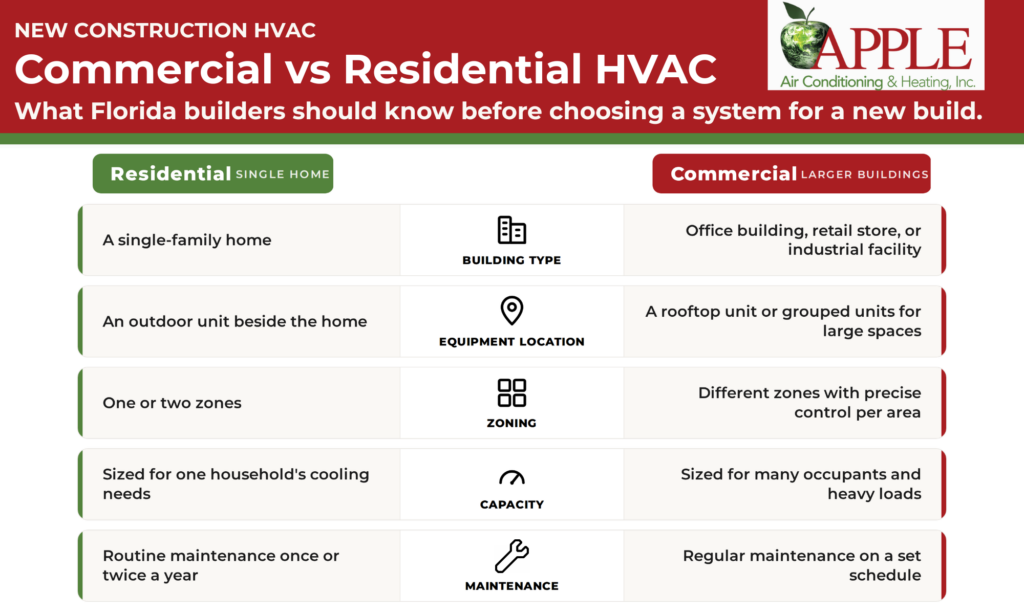
A commercial HVAC system handles bigger loads, more people, and more open square footage than a residential system. The equipment is heavier, the ductwork is larger, and the controls let you manage each zone independently.
Common Commercial HVAC System Types for New Construction
The right HVAC system depends on the building’s size, layout, and use. These are the options Florida builders run into most often.
Rooftop Units (RTUs)
A rooftop unit is a packaged system that sits on the roof and pushes conditioned air down into the space below. RTUs are a popular pick for a retail store, a strip center, or an office building because they free up ground space and group the air conditioning and heating in one spot. Service crews can reach them without walking through the business.
Variable Refrigerant Flow (VRF) Systems
A variable refrigerant flow system, also called variable refrigerant volume, runs refrigerant to several indoor units from one outdoor unit. VRF systems let you hold different temperatures in different zones at the same time, which works well for offices, medical suites, and larger buildings with many rooms. A multi-split system uses the same idea on a smaller scale for tighter layouts.
Heat Pumps and Split Systems
A heat pump moves heat instead of burning fuel, so one unit can cool in summer and heat in the winter. In Florida’s climate, a heat pump is a common and energy-efficient choice. Some buildings still use natural gas furnaces for commercial heating, but the best setup depends on the building’s cooling needs and how it will be used.
Refrigeration for Special Spaces
If the build includes a restaurant, grocery, or warehouse, you may also need refrigeration. Walk-in coolers and freezers run on the same refrigeration cycle as an air conditioner, moving heat across an evaporator coil to keep products cold. Planning these systems alongside the main HVAC equipment keeps the whole project on track.
Sizing and Design: Get It Right Before the Build
Sizing is where many commercial projects go sideways. A unit that is too big short-cycles, wastes power, and wears out sooner. A unit that is too small never keeps up on the hottest days. An HVAC professional runs a load calculation based on square footage, insulation, windows, and how many people will fill the space.
Good commercial HVAC solutions cover a few design basics:
- Load calculations for the building’s real heating and cooling needs
- Ductwork sized for steady airflow and even temperature control
- Zoning so different zones hold their own settings
- Equipment placement, such as where the rooftop unit or outdoor unit will sit
According to the U.S. Department of Energy, oversized or poorly installed equipment leads to efficiency losses, higher energy costs, and a shorter equipment life. Getting the math right during design saves money later.
When to Bring Your HVAC Contractor Into the Project
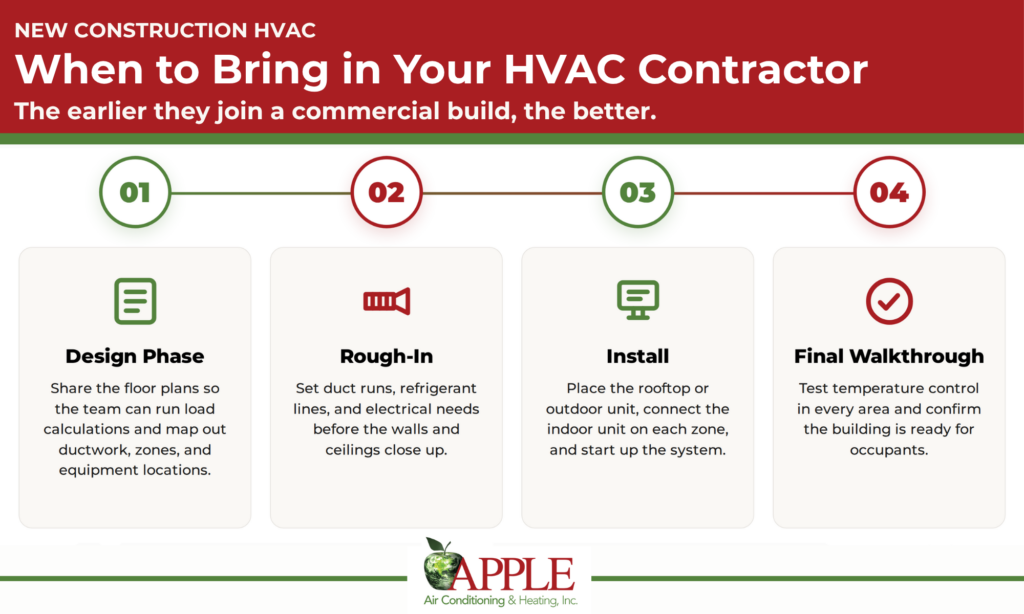
Timing matters as much as the equipment itself. The earlier an HVAC contractor joins the project, the easier it is to build the system into the plans rather than force equipment and ductwork into a finished structure. A good rule of thumb for a commercial property looks like this:
- Design phase: Share the floor plans so the contractor can run load calculations and map out ductwork, zones, and equipment locations.
- Rough-in: Set duct runs, refrigerant lines, and electrical needs before walls and ceilings close up.
- Install: Place the rooftop unit or outdoor unit, connect the indoor unit on each zone, and start up the system.
- Final walkthrough: Test temperature control in every area and confirm the building is ready for occupants.
Pulling these steps into the build schedule early keeps the HVAC work from holding up your certificate of occupancy.
Florida Brings Its Own Challenges
Central Florida’s heat and humidity put commercial HVAC equipment to work nearly year-round. A system has to lower the temperature and pull moisture out of the air at the same time. That shapes equipment choice, drainage, and indoor air quality across the building. A commercial system built for Central Florida should include:
- Humidity control that protects the building and keeps occupant comfort high
- Indoor air quality products that cut down on mold, pollen, and other allergens
- Corrosion-resistant parts that hold up in a hot, humid climate
- Energy efficiency that keeps energy consumption in check through long cooling seasons
Designing for moisture from the start protects drywall, flooring, and stored goods down the line.
Plan for Energy Efficiency and Lower Operating Costs
Energy is one of the biggest operating costs for any commercial property. Choosing efficient equipment during new construction locks in energy savings for the life of the building.
- ENERGY STAR certified light commercial HVAC equipment uses about 17% less energy than standard equipment.
- Right-sizing and well-built ductwork lower energy consumption from day one.
- Newer systems use advanced technology like variable-speed compressors for steadier output and added energy savings.
Build Maintenance Into the Plan
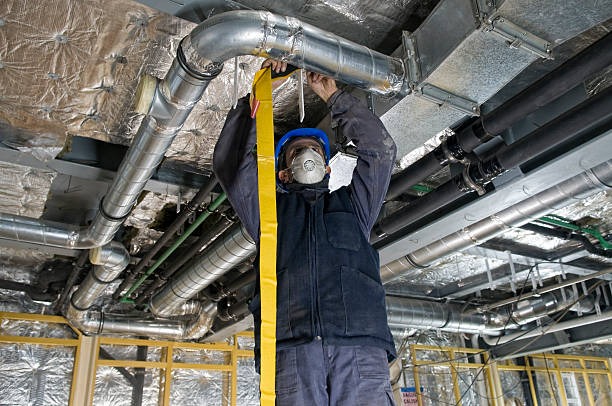
A new system runs best with a plan for regular maintenance from the start. Preventative maintenance keeps equipment under warranty, holds efficiency steady, and catches small problems before they turn into repairs.
- Schedule routine maintenance and a regular inspection a couple of times a year
- Keep filters, coils, and drains clean for steady temperature control
- Set up a service agreement so visits do not get missed
- Know who to call for fast repair services if something goes down
Pro Tips for a Smoother Build
- Bring an HVAC professional in during design, not after framing starts.
- Match the system to the building’s final use, since a retail store and an office building have different cooling needs.
- Ask about financing and warranties before you order HVAC equipment.
Choosing a Commercial HVAC Contractor in Florida
The contractor you pick shapes how the whole system performs for years. For a commercial build, look for a team that works on projects your size and knows the local code. A few things worth checking before you sign:
- A current Florida mechanical contractor license
- NATE-certified technicians with real commercial HVAC experience
- Real experience with commercial new construction and larger buildings
- Clear pricing, written warranties, and a maintenance plan for after the install
Apple AC checks each of these boxes. The team is a licensed Florida mechanical contractor with NATE-certified technicians, has run commercial new construction across Central Florida since 1997, and backs new installs with 10-year warranties and service agreements.
Building With the Right HVAC Partner
Getting the HVAC right on a new commercial build comes down to early planning, honest sizing, and a maintenance plan you can count on. Match the system to the building, design for Florida’s heat and humidity, and choose equipment that keeps energy costs low for the life of the property.
If you are planning a project in Central Florida, Apple AC can help. The team installs all makes and models and sets up indoor air quality systems for builds of every size, including retail stores, restaurants, office buildings, larger industrial facilities, and more. Contact us to submit a request for proposal. Call (407) 654-3777 or get an estimate to talk through the right HVAC system for your build.