


Short Answer: AC preventative maintenance is scheduled service performed on your HVAC system before something breaks, and it covers filter changes, coil cleaning, condensate drain flushing, refrigerant and airflow checks, and electrical testing. Central Florida HVAC systems run far more hours than systems in cooler states, so homeowners and business owners should perform monthly maintenance and then bring in a professional annually for more intensive inspections.
Summer is in full swing, and temperatures keep climbing. Most of the costly breakdowns we get called out for this time of year come down to two factors: skipped maintenance and repairs that were never done right the first time. Both are avoidable. Below are the failures we see most often across Orange, Lake, Seminole, and Sumter Counties, along with the routine maintenance that can prevent emergency repairs.
Cooling matters more in Florida than in most of the country. The U.S. Energy Information Administration found that air conditioning accounts for 28% of total household site energy in Florida, compared with 9% nationally. Your HVAC system logs far more run hours than the same model would in Atlanta or Nashville, meaning it wears down faster.
What Professional HVAC Preventative Maintenance Includes
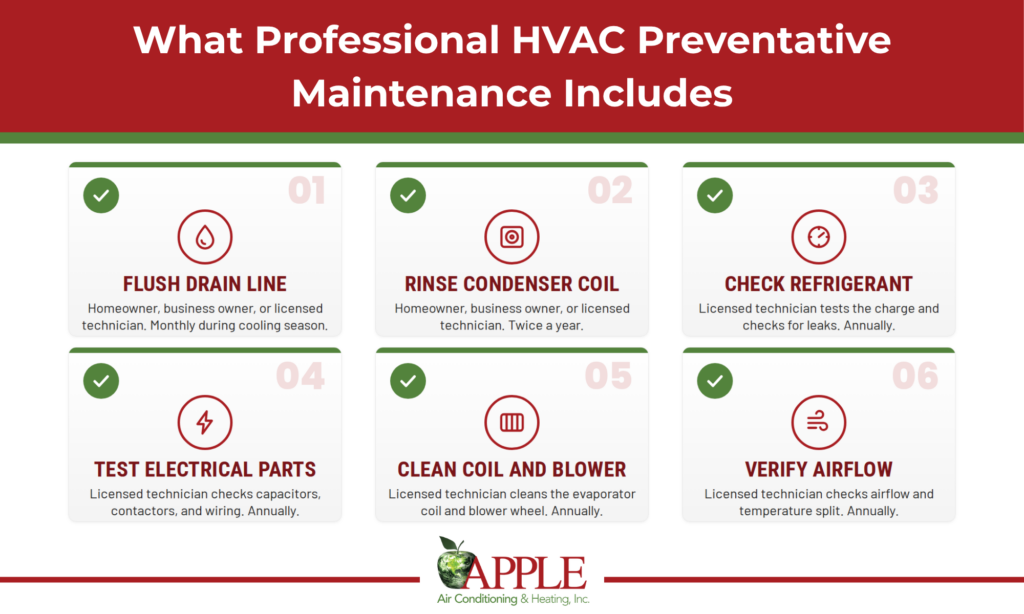
While some preventative maintenance tasks can be completed by homeowners, others should be completed by a licensed technician. There are six main tasks that should be completed to ensure your AC is working properly:
- Flush the condensate drain line monthly
- Rinse the condenser oil twice a year
- Check refrigerant charge and test for leaks annually
- Test capacitors, contractors, and wiring connections annually
- Clean the evaporator coil and blower wheel annually
- Verify airflow and temperature split annually
Causes of Air Conditioner Breakdowns
Your AC Is More Than Five Years Old
If your air conditioner is more than five years old, or you have never had it serviced, now is the time to have it checked over. Older systems develop worn capacitors, pitted contactors, corroded coils, and small refrigerant leaks at brazed joints. A five-year-old system in Central Florida has already run the hours a ten-year-old system would rack up in a cooler climate. Regular inspections catch wear while it is still repairable, which is what adds equipment life rather than shortening it. Skipping regular maintenance may save you money at the time, but it moves the cost into a larger repair later.
Refrigerant Leaks and Low Charge
Refrigerant does not get used up the way gasoline does. If your system is low, it is leaking. The EPA estimates that residential systems lose roughly 5% to 11% of their refrigerant charge per year through pinhole leaks in coils, fittings, and line sets caused by corrosion and vibration fatigue. Additionally, 78% of undercharged systems were faulty from installation, usually because the installer never adjusted the charge for a longer line set.
The performance loss is measurable. Research published in the International Journal of Refrigeration found that a 25% charge reduction cut energy efficiency by roughly 15% and cooling capacity by about 20%. Running low also starves the compressor of the cooled refrigerant vapor it relies on, which is how a $300 leak repair turns into a $2,500 compressor replacement. Small leaks left alone are one of the most common paths to costly repairs on an otherwise healthy system.
Dirty Filters and Restricted Airflow
A clogged filter is the cheapest problem on this list, but also the one that can cause the most damage. The U.S. Department of Energy reports that replacing a dirty, clogged filter with a clean one lowers an air conditioner’s energy consumption by 5% to 15%. Restricted airflow also drops evaporator coil temperature below freezing, so the coil ices over, airflow stops entirely, and liquid refrigerant finds its way back to the compressor.
Florida homes load filters faster than homes anywhere else because the system runs more hours and moves more humid, pollen-heavy air. A filter rated for 90 days often needs replacing at 30 days during summer.
A Clogged Condensate Drain Line
Your evaporator coil pulls gallons of water out of the air every day, and it all exits through one narrow PVC line. Algae and biological slime build up inside that line, back the water up into the drain pan, and either trip the float switch and shut the system down or overflow into the ceiling and drywall. Water damage from a $15 drain line is one of the most common insurance claims we receive on residential HVAC. Pouring distilled vinegar down the access port once a month during the cooling season can help prevent most of it.
3 General Air Conditioner Maintenance Tips
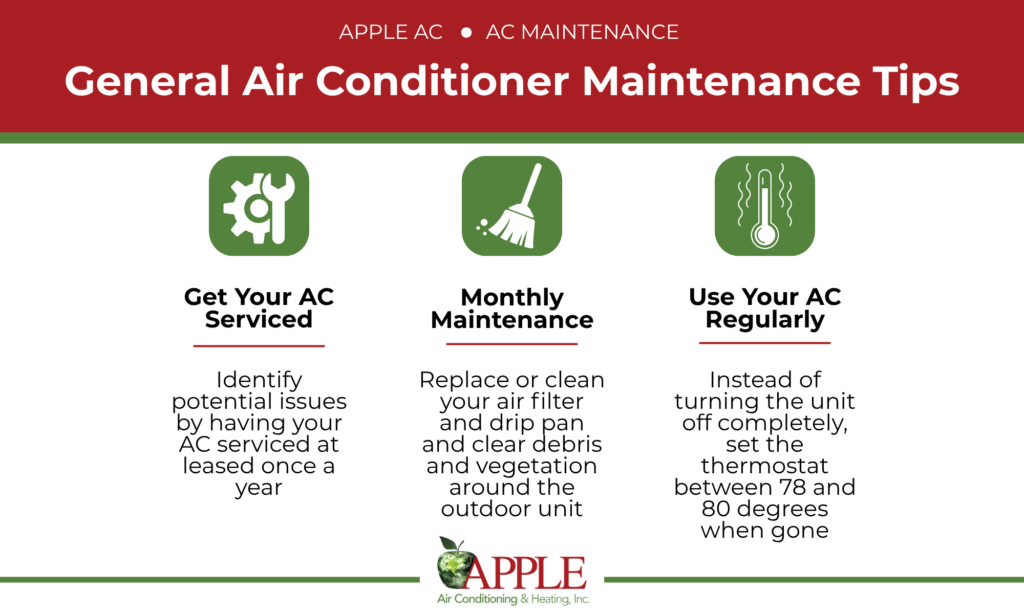
Get Your AC Serviced Annually
Have your system professionally serviced once a year by a qualified technician. Spring is the ideal window, before the heat arrives and before the schedule fills with emergency calls. During a service visit, a certified technician will catch potential issues while they are still small, verify the refrigerant charge, tighten electrical connections, clean the coils, and confirm the system is producing the temperature split it was designed for.
Annual professional service is a written requirement in most manufacturer warranties, and skipping it can void coverage on equipment you are still paying for. The maintenance cost of one yearly visit can sit well below what a single emergency call and part replacement runs. Additionally, annual maintenance can help your system last up to 30% longer. If you have not scheduled service yet this year, contact Apple AC to get on the schedule.
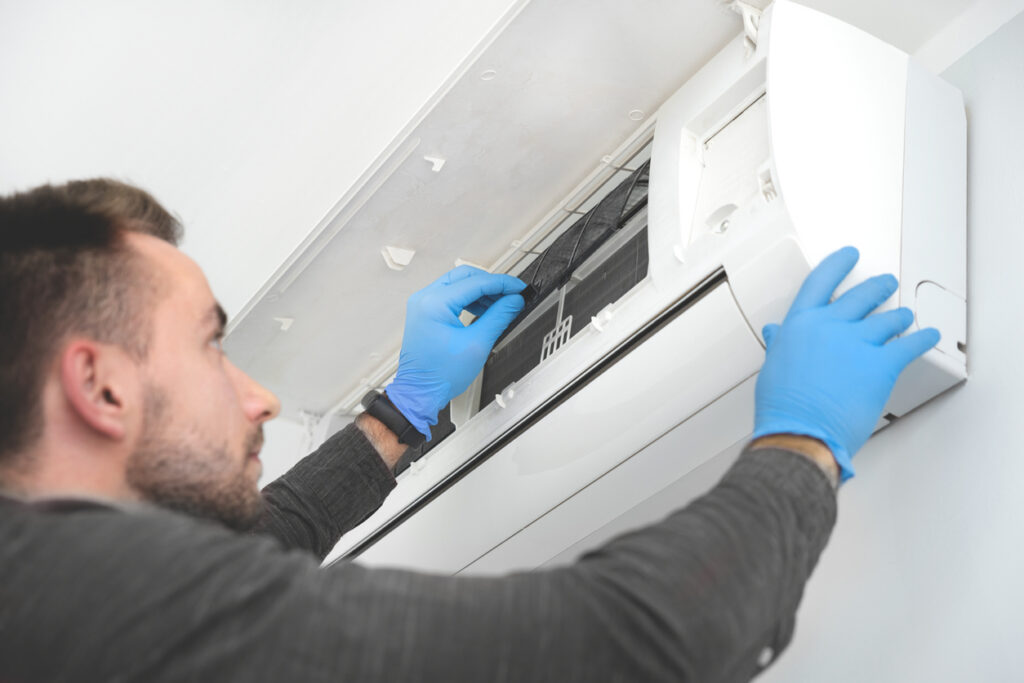
Don’t Skip Monthly Maintenance
Cleaning gets overlooked because nothing appears to be wrong until performance drops. Pull the filter, check the drip pan, and wash the pan in warm water with a small amount of dish soap. Hold the filter up to a light. If very little light passes through, replace it rather than trying to clean it, since a pleated filter loses its media integrity once it is saturated.
Outside, shut the power off at the disconnect and rinse the condenser coil with a garden hose, spraying from the inside out so dirt exits the way it came in. Keep two feet of clearance around the entire unit. Grass clippings, hedge trimmings, and mulch piled against a dirty coil can block the airflow a unit depends on to reject heat.
Use Your AC Regularly
A system that sits idle develops problems. Seals dry out, bearings stiffen, and moisture sits where it should not, much like a car left parked for an extended period of time. This can be a common issue for properties such as vacation homes and seasonal rentals. Instead of shutting the system off completely when a property is empty, set the thermostat around 78 to 80 degrees so it continues cycling and controlling humidity. Mold growth in an unconditioned Florida building costs far more to fix than the electricity you saved.
How Apple AC Can Help
Apple Air Conditioning & Heating, Inc. offers 24/7 emergency service, because a broken AC in the Florida heat can’t wait. Our NATE-certified technicians work to get your system running again quickly. Beyond emergency repairs, we also provide AC maintenance and tune-ups, and a maintenance plan that keeps your system on a regular service schedule.
Need a repair or ready to book your next preventive maintenance visit? Call Apple AC at 407-654-3777 or schedule service online.