


The Short Answer: Indoor air quality matters in Central Florida because high humidity, heavy AC use, and tightly sealed homes trap pollutants, mold, and allergens inside. An indoor air quality specialist can test your home and treat the problems with the right filtration and UV products built into your HVAC system to give your family cleaner air.
Most people picture air pollution as something outside, but the air inside your home is usually the bigger problem. The EPA reports that the levels of indoor air pollutants are often 2 to 5 times higher than outdoor levels, and Americans spend about 90 percent of their time indoors. In a humid place like Central Florida, where the AC runs almost year-round and homes stay sealed up against the heat, indoor air quality is even more important. This guide walks through what affects the air in your home, the health risks of an unhealthy indoor environment, and how an indoor air quality specialist can help you breathe easier.
Why Indoor Air Quality Hits Different in Central Florida
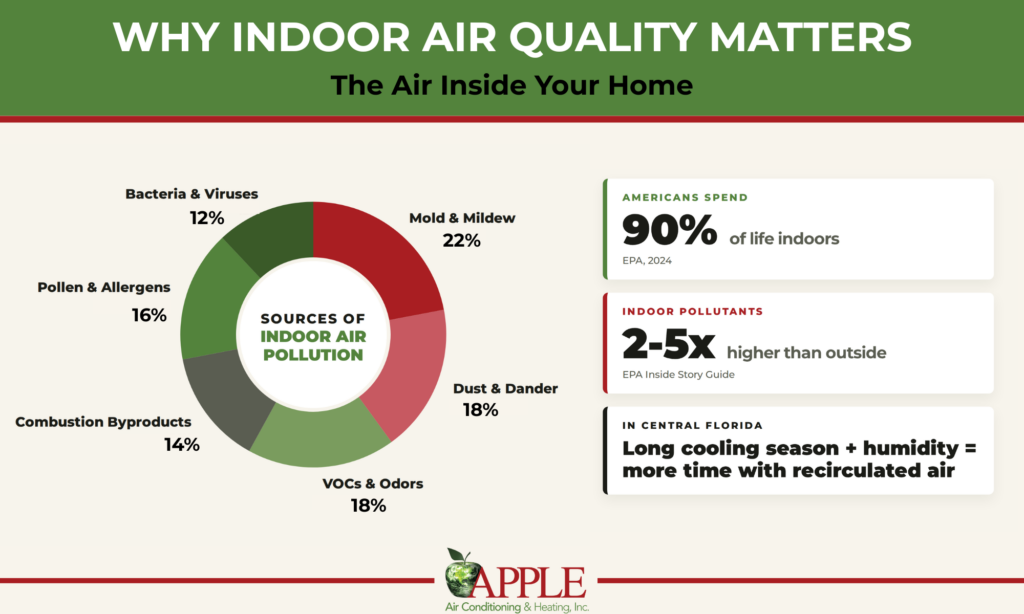
Florida living comes with a unique mix of air quality challenges. Local realities shape the air inside your home:
- High humidity feeds mold growth, dust mites, and other biological indoor air pollutants.
- A long cooling season means your AC and duct system are recirculating the same air for most of the year.
- Newer homes are built tight for energy efficiency, which can mean inadequate ventilation if no mechanical fresh-air system is in place.
- Pollen and outdoor allergens hitchhike inside on shoes, pets, and clothing.
That mix can turn even a clean home into an unhealthy indoor environment. The fix is treating the air at the source with the right filtration, UV, and ventilation paired to your HVAC system.
What Hurts Indoor Air Quality at Home
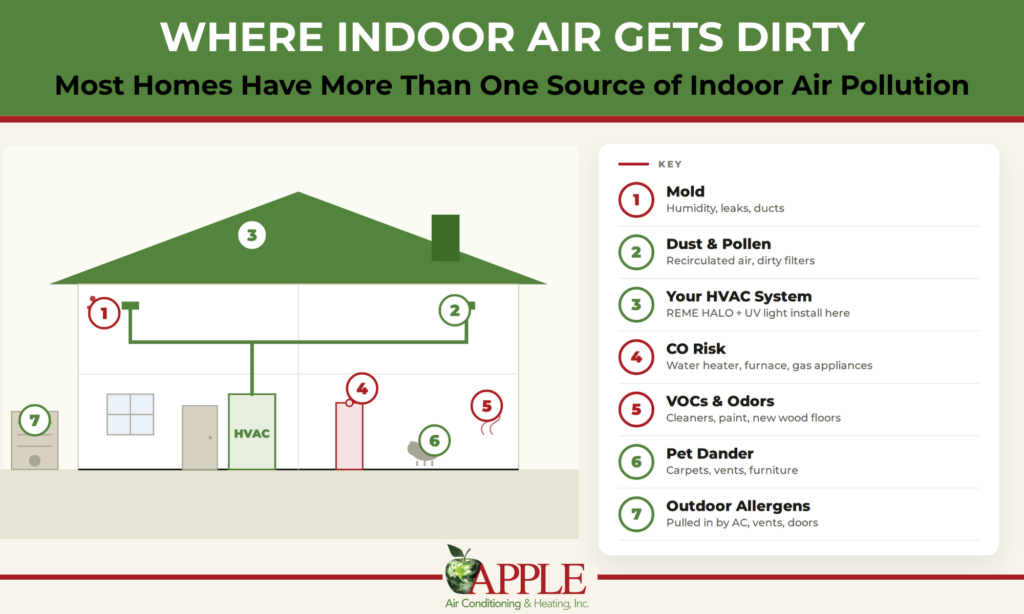
Indoor air quality concerns build up from a handful of common sources, most of which are inside your home right now.
Common indoor air pollutants:
- Mold and mildew from humidity, leaks, or a poorly draining condensate line
- Dust, pet dander, and pollen pulled into your HVAC system
- Chemical odors and VOCs from cleaners, paint, new wood floors, and pressed-wood furniture
- Carbon monoxide from gas appliances, a water heater, or a furnace with a venting issue
- Static electricity and dry air during the short heating season
- Bacteria and viruses circulated through the ductwork
Many types of mold can grow on drywall, ceiling tiles, and inside ductwork if the moisture is right, and Central Florida’s humidity provides plenty of moisture. The CDC notes that mold issues are best handled by cleaning up the moisture problem first, then removing the mold itself.
Health Risks of an Unhealthy Indoor Environment
Most people don’t notice poor indoor air quality until they can feel it. The health effects show up slowly:
- Coughing, sneezing, sore throat, and watery eyes
- Worse asthma and allergy symptoms, plus a drop in personal comfort at home
- Headaches and fatigue that fade when you leave the house
- Sinus pressure and stuffy noses that hang on for weeks
- Trouble sleeping in dusty or stuffy rooms
Kids, older adults, and anyone with a respiratory condition feel it first. Cleaner air is worth the investment at home or in any place where people spend long hours, like a commercial building.
What an Indoor Air Quality Specialist Does
An indoor air quality specialist treats the air in your home like a system, and the work usually follows a clear path:
- A walk-through and air quality testing to find sources of indoor air pollutants
- A mold assessment or mold testing if there are signs of a mold problem
- A look at your HVAC system, ductwork, and ventilation
- A plan that pairs the right products to your specific indoor air quality concerns
- Installation, follow-up service, and ongoing maintenance to keep the system working
A good air quality specialist will explain what they find in plain language and lay out repair, installation, and service options so you can choose what fits your home and budget.
Apple AC’s Indoor Air Quality Products
Apple AC carries two whole-home products that work directly inside your HVAC system to clean the air without changing how your AC and heating run day to day.
- REME HALO whole-home air purifier. This in-duct purifier uses advanced oxidation to reduce odors, smoke, pollen, dander, mold spores, bacteria, and viruses across every room your AC reaches.
- Blue-Tube UV system. A UV light installed in the air handler targets mold and microbes on the coil and in the air stream, which helps the system stay cleaner and run more efficiently.
Both products live on your existing HVAC equipment, so they protect the whole house instead of one room at a time. You can read more on Apple AC’s indoor air quality page and the UV lights page.
Pro Tip: Pair an in-duct purifier with regular HVAC maintenance and a fresh filter for the best results.
Simple Habits That Improve Indoor Air
A few habits go a long way before you spend on new equipment:
- Change your HVAC filter every one to three months
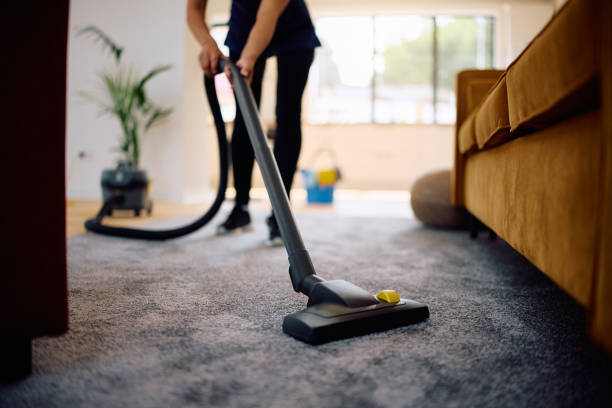
- Vacuum carpets, rugs, and wood floors with a vacuum that has a sealed HEPA bag
- Run bathroom and range hood exhaust fans during and after showers and cooking
- Watch your indoor humidity, ideally between 30 and 50 percent year round
- Test working carbon monoxide detectors twice a year
- Schedule annual HVAC maintenance and a duct check
These steps will not solve a real mold issue or a serious ventilation problem, but they will help any home tilt toward clean air instead of away from it. For a deeper dive, the EPA’s Inside Story guide to indoor air quality and the CDC’s page on mold are good resources, especially if you are dealing with a stubborn mold problem.
When to Call an Indoor Air Quality Specialist
Call a professional if any of these sound familiar:
- A musty smell that comes and goes with the AC
- Visible mold on walls, ceilings, vents, or around the air handler
- Allergy or asthma symptoms that get worse at home
- A new home that feels stuffy or has lingering chemical odors
- An insurance claim tied to water damage or a flood
- Coughing, headaches, or eye irritation that clear up when you leave
These are the moments to bring in HVAC specialists who can test the air, do a proper mold assessment, coordinate mold remediation if it is needed, and pair the right HVAC products with the fix.
Cleaner, Healthier Air for Your Home
The right mix of filtration, UV, ventilation, and HVAC service can turn an unhealthy indoor environment into a healthier indoor environment without changing the way you live.
Apple AC has served Central Florida families since 1997, guided by honesty, integrity, and commitment. Our NATE-certified team covers many surrounding areas of Central Florida, with residential and commercial service, in-duct REME HALO and Blue-Tube UV installation, and ongoing HVAC maintenance through our energy savings plan.
Schedule a free in-home consultation, book service, ask about financing, or call Apple AC at 407-654-3777 to talk with an indoor air quality specialist about your home.