

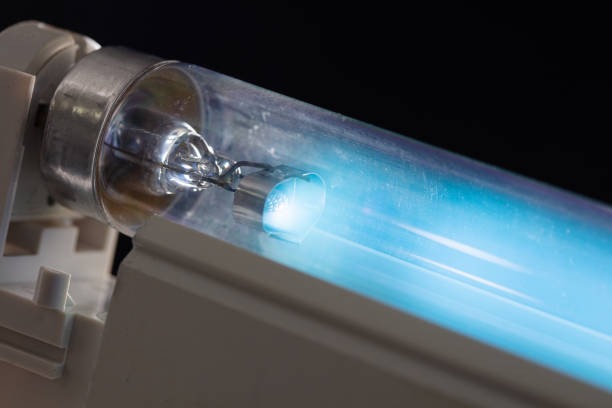
The Short Answer: A UV air purifier for your HVAC system uses ultraviolet light to reduce mold, bacteria, and other airborne contaminants as air moves through your ducts and across the cooling coil. The REME HALO treats the air throughout your whole home, a Blue-Tube UV light keeps your evaporator coil clean, and both work alongside your regular air filter.
In humid Central Florida, your air conditioner runs most of the year, and the damp, dark space around the coil is where mold and bacteria tend to grow. A UV system adds protection your filter alone cannot provide.
How UV Air Purification Works in Your HVAC System
Ultraviolet light is a form of energy found in sunlight. The band used for air treatment is UV-C light, also called UVC light, which can damage the cells of mold, bacteria, and viruses so they cannot grow or spread. Because UV rays are strongest up close, these systems are built into your HVAC equipment where the air is already moving.
There are two common approaches:
- UV-C germicidal treatment: A UV lamp shines on the evaporator coil and the air passing by. It targets mold spores and airborne bacteria at the source and keeps the coil clean. This is how a Blue-Tube UV light works.
- Advanced oxidation: A UV bulb reacts with a catalyst, a process similar to photocatalytic oxidation, to create purifying molecules that travel through the ductwork. This reaches airborne particles, microbes, odors, and some gaseous pollutants such as volatile organic compounds and other chemical vapors across your whole home. This is closer to how the REME HALO works.
The EPA’s Guide to Air Cleaners in the Home notes that UV air cleaners are meant to work with good filtration, not replace it. Your air filter still catches dust and airborne particles, while UV adds microbe control on top, so the two work as a team. In a Florida climate, that pairing matters, especially since your air conditioner recirculates the same indoor air many times a day.
REME HALO and Blue-Tube UV: What Is the Difference?
Apple AC installs two proven options, and the right one depends on your home and your goals:

Both are UV systems, and many homes start with one and add the other later. Our team can look at your setup and your air quality goals before making a recommendation.
Benefits of Adding UV to Your HVAC System
Used with a good filter and regular service, a UV system helps in a few practical ways:
- Less mold and mildew: UV-C light slows mold growth on the damp coil and drain area, which is common in Florida humidity.
- Fewer musty odors: Treating mold and bacteria at the source cuts the stale smell that filters miss.
- Cleaner air throughout the home: A whole-home system like the REME HALO treats the air across every square foot of your home, room by room.
- Steadier airflow: A clean coil moves air better, which helps your cooling system run the way it should.
- Support for sensitive households: Cutting airborne contaminants may help family members dealing with allergies or respiratory issues, though results vary by home.
- Fewer surprises: Keeping the coil clean can reduce buildup that leads to bigger repairs and higher maintenance costs.
What UV Treatment Can and Cannot Do
Being honest about limits helps you plan. A UV air purifier adds real protection, though it has limits worth knowing.
- It does not remove particles: UV-C inactivates microbes such as bacteria, viruses, and mold, but it does not capture dust, pollen, pet dander, or smoke. UV supplements filtration rather than replacing it, and those particles still pass through unless a good filter catches them first. When it is time, Apple AC can upgrade you to a higher-efficiency air filter for finer particle capture.
- Its coverage is limited: A coil-mounted UV-C lamp mainly disinfects the coil and the air right around it. It does not treat all of the air moving through the home, because air passing quickly by the lamp gets little exposure. A whole-home or in-duct system with higher output covers more of the moving air. Even then, results depend on lamp strength, placement, and how long the air stays in the light.
- The light is hazardous if exposed: UV-C can burn skin and eyes on direct contact, so it has to stay sealed inside the ductwork or unit. A correct installation keeps it away from living spaces and lets it work safely. A cracked housing or a rushed do-it-yourself setup that leaks light becomes a safety problem, which is why it should be installed by a professional.
- Some systems produce ozone: A few UV and ionizing units give off a trace of ozone, which is a lung irritant at high concentrations. In whole-home systems, the amount is very small and stays well below levels of concern, especially with professional installation. If ozone is a concern for your household, ask about an LED-based system, which is built to run ozone-free.
- It weakens before it stops working: A UV bulb keeps giving off visible light after its germicidal strength has dropped, so a lamp that looks fine may not be performing well. Most bulbs need replacing about once a year to stay effective. That is an ongoing cost and an easy thing to overlook. Building the replacement into a regular maintenance visit keeps the system working and the cost predictable.
Getting the Most from Your UV System

A UV system does its best work as part of a simple routine. These steps keep your air conditioning running clean and your air quality steady:
- Pair it with a good filter: Match your air filter to your home’s HVAC system and change it on schedule so the UV light and the filter share the load.
- Size it to your home: A whole-home purifier should fit your home’s square footage so it can treat the air in every room instead of one corner.
- Keep up with maintenance: Routine service keeps the coil clean and helps the system reduce airborne pollutants and indoor air pollution over time.
- Replace the bulb on schedule: A UVC lamp fades with use, so a planned bulb replacement keeps the output strong.
- Control humidity: Lower humidity levels give mold and mildew less room to grow between visits.
Is UV Air Purification Worth It in Central Florida?

Central Florida’s heat and humidity make this an easy call for many homes. Damp coils and long run times give mold and bacteria a place to grow, and high humidity levels feed that growth. A UV system helps hold the line between maintenance visits and supports better indoor air quality year-round. A cleaner system also tends to smell fresher and run more predictably through our long cooling season.
The same is true for commercial buildings, where one HVAC system moves air past a lot of people all day. If anyone at home deals with allergies, asthma, or other respiratory issues, cleaner indoor air is worth considering as part of your overall plan for a healthier indoor environment.
Breathe Easier with Apple AC
Cleaner indoor air comes down to a simple plan: a good filter, routine maintenance, and a UV system that fits your home. UV-C light and whole-home air purification handle the mold and bacteria your filter cannot, which means fewer musty odors and healthier air for your family.
Since 1997, Apple AC has helped Central Florida families breathe easier across Orange, Lake, Seminole, Osceola, and Sumter Counties. As a family-owned company with three generations in the trade, we install and service indoor air quality products like the REME HALO and Blue-Tube UV, and our NATE-certified technicians help you pick the right fit. We also handle maintenance, new installations, and financing to keep the whole system running clean.
Ready for cleaner air? Schedule service, request a free estimate, or call (407) 654-3777 today.