

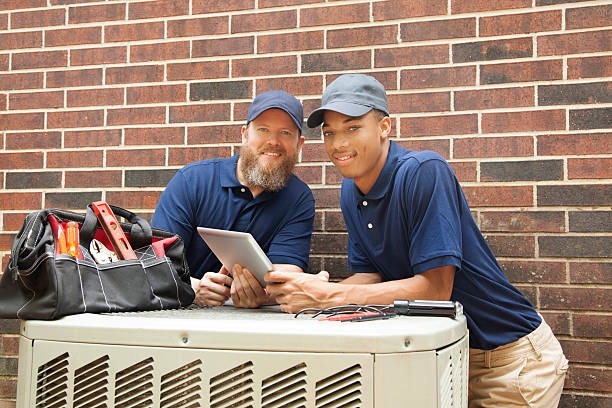
The Short Answer: The commercial vs residential HVAC difference comes down to scale, placement, and complexity. Commercial systems are larger, usually sit on the roof, serve multiple zones, and need a technician trained on that equipment, while residential systems are smaller, simpler, and built for one household.
If you own a home and a storefront, you already know the two get treated differently. This guide covers the real differences in equipment, placement, service, and cost, so you know what you are dealing with on either property.
At a Glance
Size and Capacity
The clearest difference is how much air the system has to move.
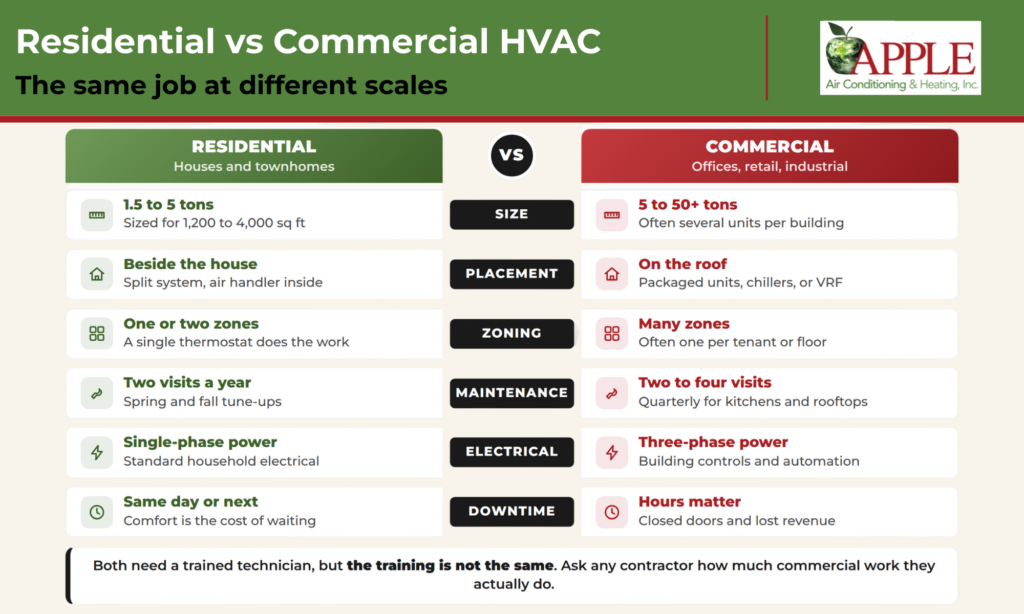
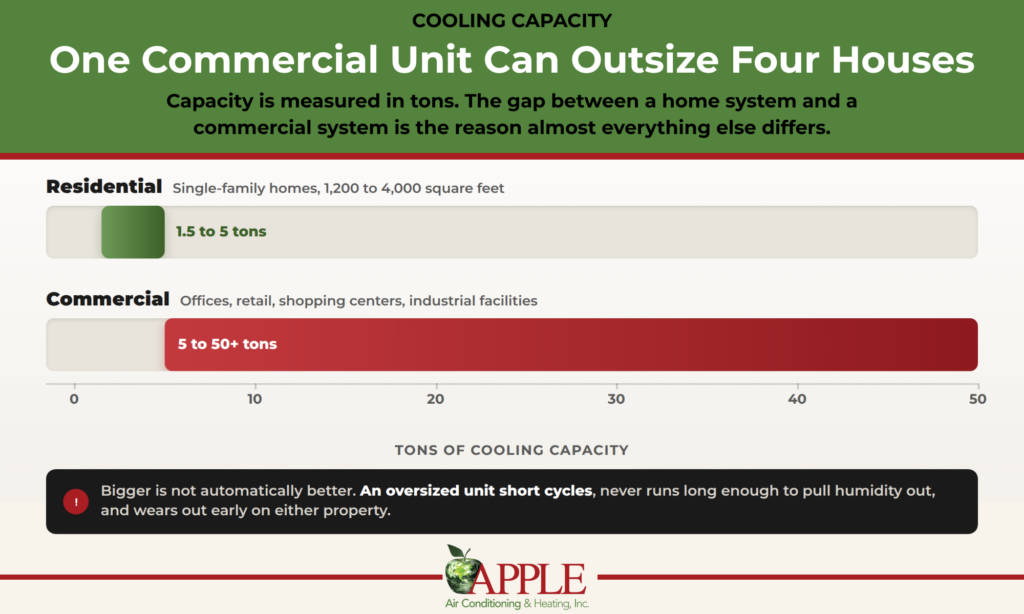
A residential HVAC unit in Central Florida usually runs between 1.5 and 5 tons, sized for a house somewhere in the 1,200 to 4,000 square feet range. Single-family homes rarely need more.
A commercial HVAC system starts where a residential HVAC system ends. An office building, shopping centers, and industrial facilities might run several units totaling 50 tons or more, and the load changes with how many people are inside on a given day. One commercial unit can carry more capacity than four houses combined.
Where the Equipment Lives
Residential
Most homes run a split system. The condenser sits on a pad beside the house, the air handler lives in a closet, garage, or attic, and refrigerant lines connect the two. Access is easy and the equipment is at eye level, which is part of why residential repairs usually wrap up in one visit.
Commercial
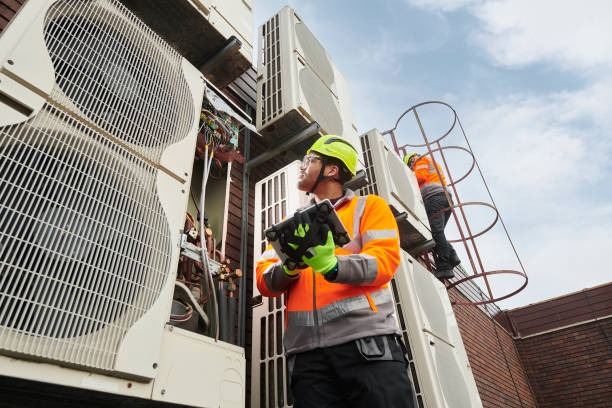
Commercial buildings favor rooftop units, sometimes called packaged units, which hold everything in one cabinet on the roof. That keeps noise and equipment out of leasable space, but it also means every service call starts with a ladder and every part goes up the same way.
Larger properties may run chillers, boilers, or variable refrigerant flow systems instead, and industrial equipment adds process cooling on top of comfort cooling. Our commercial HVAC team services rooftop units and VRF systems across Central Florida, along with walk-in coolers and ice machines for restaurants and groceries.
Roof access also changes the job. A commercial HVAC unit that needs a crane for replacement is a different project from a residential unit two technicians can carry.
Complexity and Controls
A residential system has one thermostat and one job. Commercial systems get complicated fast.
- Multiple zones let different areas hold different temperatures, which means more dampers, sensors, and controls to go wrong
- Ventilation systems bring in outside air at rates set by code, something most homes handle passively
- Building automation ties heating systems, cooling, and sometimes lighting into one panel
- Electrical systems run three-phase power on commercial equipment instead of the single-phase power in a house
- Heating systems differ too, since commercial heating often ties into the same rooftop cabinet
Smart thermostats and programmable thermostats show up on both sides now. On a house, one unit handles the whole home. On a commercial property, the same idea scales into a control system a manager watches from an office.
Those advanced features are worth having on either property, though they pay back faster where there is more equipment to coordinate. Air quality equipment follows the same pattern, since indoor air quality in residential buildings is a smaller job than ventilating a full floor of offices.
Who Works on It
This is the part property owners underestimate. A residential technician and a commercial technician are doing related work with different tools, sizes, and code requirements.
A residential HVAC technician spends the day on split systems, air handlers, and the problems that come with them. Residential work is fast-paced and volume-driven, with several calls a day and homeowners waiting.
Commercial techs handle bigger equipment, three-phase electrical systems, rooftop access, and controls that a residential unit never has. Commercial work often means scheduled projects, longer jobs, and coordinating around a business that has to stay open.
Residential techs and commercial technicians build different kinds of technical expertise, and it does not automatically cross over. When you hire, ask a licensed HVAC contractor how much of their work is commercial and who specifically handles it.
NATE certification is worth asking about on both sides, since it tests to a national standard and has to be renewed. Our team covers residential and commercial work, so one call handles either property.
Maintenance Looks Different Too
Both need regular maintenance. The schedule and the stakes differ.
| Residential | Commercial | |
| Visits per year | Two, spring and fall | Two to four, more for kitchens and rooftop units |
| Filter changes | Every 90 days | Monthly to quarterly, depending on the building |
| What failure costs | Discomfort and a repair bill | Closed doors and lost revenue |
| Agreement type | Homeowner service plan | Commercial maintenance plan with priority service |
Routine maintenance on a house is straightforward. Our AC maintenance checklist covers what a homeowner can handle, scheduled tune-ups cover the rest, and these efficiency habits help between visits.
On a commercial building, the same work gets scheduled around occupancy, and the equipment list has to be written into the agreement so nothing gets skipped.
Emergency Response Is Not the Same
When a home system quits, the family is uncomfortable and someone calls for emergency repairs. It gets fixed that day or the next.
When a commercial system quits, a business may be sending customers home. That is why emergency calls on commercial properties often get answered after hours, and why priority scheduling is written into most commercial agreements.
Apple AC runs 24/7 service on both sides. The difference is how fast the clock is running.
Cost and Efficiency
Commercial equipment costs more upfront and more to service, mostly because of size, access, and parts. That is expected. What surprises owners is how much the energy efficiency math differs. Our take on what drives HVAC pricing covers why quotes vary so much on both sides.
For homes, the U.S. Department of Energy rates central air conditioning equipment on SEER2, and higher-rated equipment pays back through lower bills across a nine-month Florida cooling season. Our guide to SEER ratings covers where that payback lands.
For commercial applications, ENERGY STAR notes that certified light commercial HVAC equipment uses roughly 17 percent less energy than standard equipment, and that oversized rooftop units drive up energy costs while wearing equipment out faster.
Energy-efficient systems pay back faster on a commercial building simply because there are more hours and more tons involved. Sizing matters more too, since a mistake gets multiplied across every unit on the roof. On either property, the brand matters less than the install, and knowing when to replace saves money on both.
If You Own Both
Plenty of Central Florida owners have a house and a commercial space. A few things make that easier.
- Use one company that genuinely does both, so you are not managing two vendors
- Keep separate maintenance agreements, since the buildings need different schedules
- Expect different response expectations and write them into the commercial agreement
- Ask about financing before a replacement, not during a failure
- Plan commercial replacements around your slow season, and residential replacements before summer
We handle residential HVAC services and commercial service with the same crew of NATE-certified technicians, plus new construction and AC installation on either side, across Central Florida.
Choosing the Right Company for Either Property
The commercial vs residential HVAC difference is real, and it shows up in equipment size, rooftop access, zoning, controls, and the training the technician brought with them. For residential customers it means a simpler system and a faster fix. For commercial buildings it means more complex systems, tighter timelines, and more riding on every hour of downtime.
Apple AC has worked on both since 1997. We are family owned, our technicians live in the same Central Florida towns they serve, and you get a text with your technician’s name and photo before anyone arrives at your home or building.
Ready to talk about your property? Schedule service, request an estimate, or contact our team about either building.