


Short Answer: A Freon leak happens when your AC refrigerant escapes through cracks or damaged connections in the system, reducing cooling power and forcing your unit to work harder and use more energy. You’ll need a certified HVAC technician to locate and repair the leak since refrigerant work is illegal for unlicensed people and requires specialized equipment to do safely.
If your AC isn’t cooling like it used to, you might have a freon leak. Central Florida’s heat and humidity put extreme demands on HVAC systems, and when refrigerant escapes, your unit loses its ability to do its job.
What Is An AC Freon Leak?
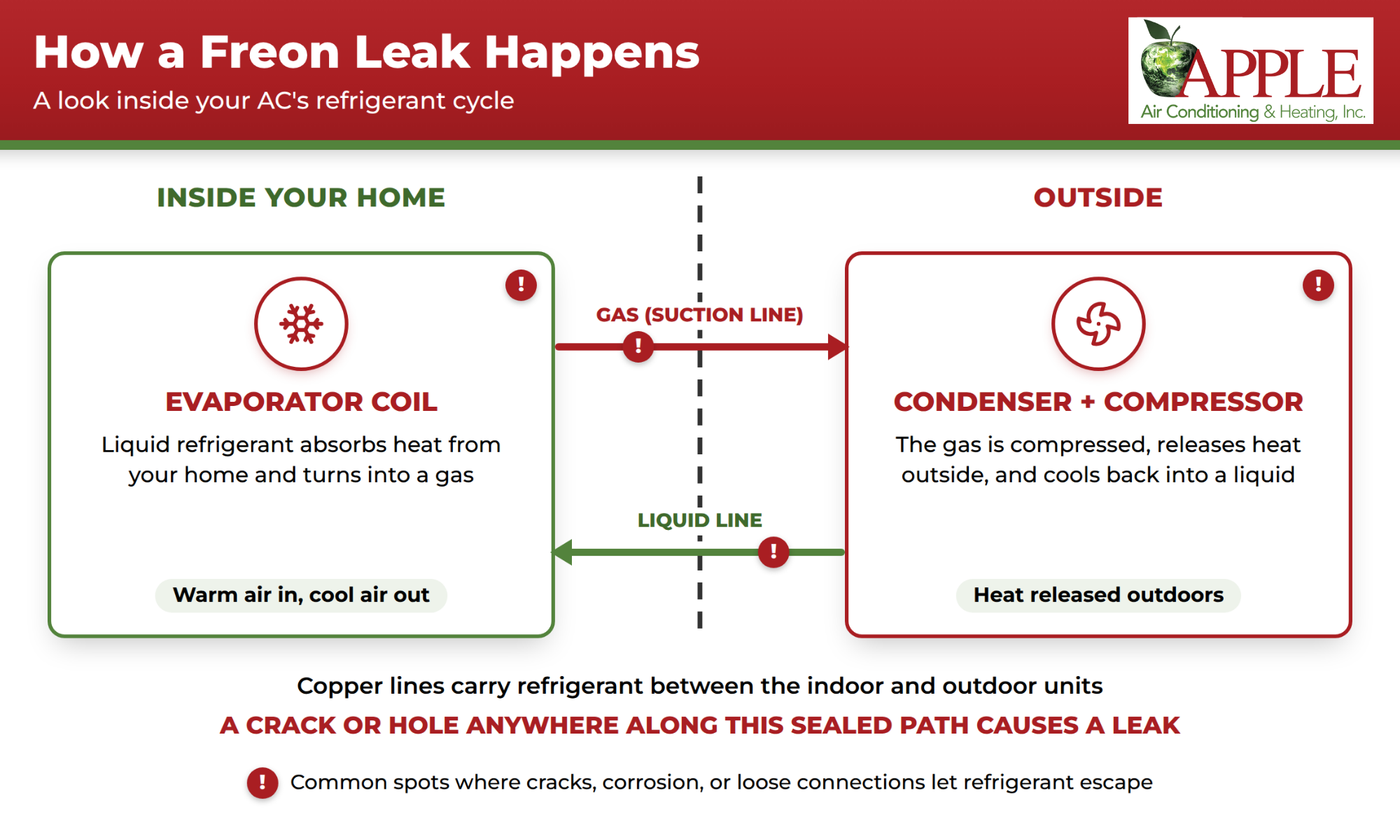
Freon is a refrigerant that circulates through your AC system, absorbing heat from inside your home and releasing it outside. The refrigerant cycles between liquid and gas states as it moves through the copper coils and lines that make up your refrigeration system’s cooling process. When these components develop cracks or holes, refrigerant escapes into the air. The point that the refrigerant escapes is the Freon leak.
Most AC leaks form in a handful of predictable spots. The evaporator coil and condenser coil are common failure points, since the metal thins out over time and develops small pinholes from corrosion. Refrigerant line connections and flare fittings can loosen from years of vibration, opening tiny gaps refrigerant slips through. Schrader valves, the small valve stems technicians use to add or test refrigerant, sometimes fail to reseal fully after service work. Solder joints on the copper lines can be another weak point, especially when the original installation was rushed.
Your AC system is a sealed unit. It should never lose refrigerant during normal operation. Low refrigerant levels mean something is wrong. A small leak might seem minor, but it directly impacts your system’s cooling capacity. Even a 10% drop in refrigerant can reduce your AC’s cooling efficiency. Over time, a slow leak forces your system to work harder to reach the temperature you’ve set, burning more energy and potentially causing permanent damage to the compressor, which may eventually require compressor replacement.
What Causes Freon Leaks
Vibration Damage
AC systems vibrate during operation. Over many years, this constant movement can stress metal lines and joints, creating weak points in your refrigeration system. A connection that was tight ten years ago might loosen as vibration gradually works it free. Loose joints eventually develop gaps where refrigerant seeps out.
Metal Corrosion and Erosion
Air conditioners live outdoors (the condenser) and indoors (the evaporator). Both environments contain moisture, salt air (in some cases), and other elements that corrode metal. Formic acid and formaldehyde can form on copper components, eating away at the metal over time. As the metal thins, it eventually cracks or develops small holes.
Damaged or Pinhole Leaks at Joints
The places where refrigerant lines connect to coils and other components are common leak spots. Corrosion at joints, poor soldering during installation, or material defects can create tiny holes. These pinhole leaks can be hard to spot visually but cause steady refrigerant loss over time.
Poor AC Installation
Installation quality matters tremendously. If your system wasn’t installed correctly, it’s more likely to develop refrigerant leaks early on. Improper installation with improperly soldered connections, incorrect line sizing, or inadequate support can all lead to leaks. If your AC is relatively new, meaning under 3-5 years old, and develops a leak, improper installation quality may be the issue.
Factory Defects
Some units leave the factory with manufacturing defects. A coil might have a hairline crack, or a connection might be improperly sealed. These defects often show up in the first year or two of operation. If your system is under warranty, factory defects may be covered.
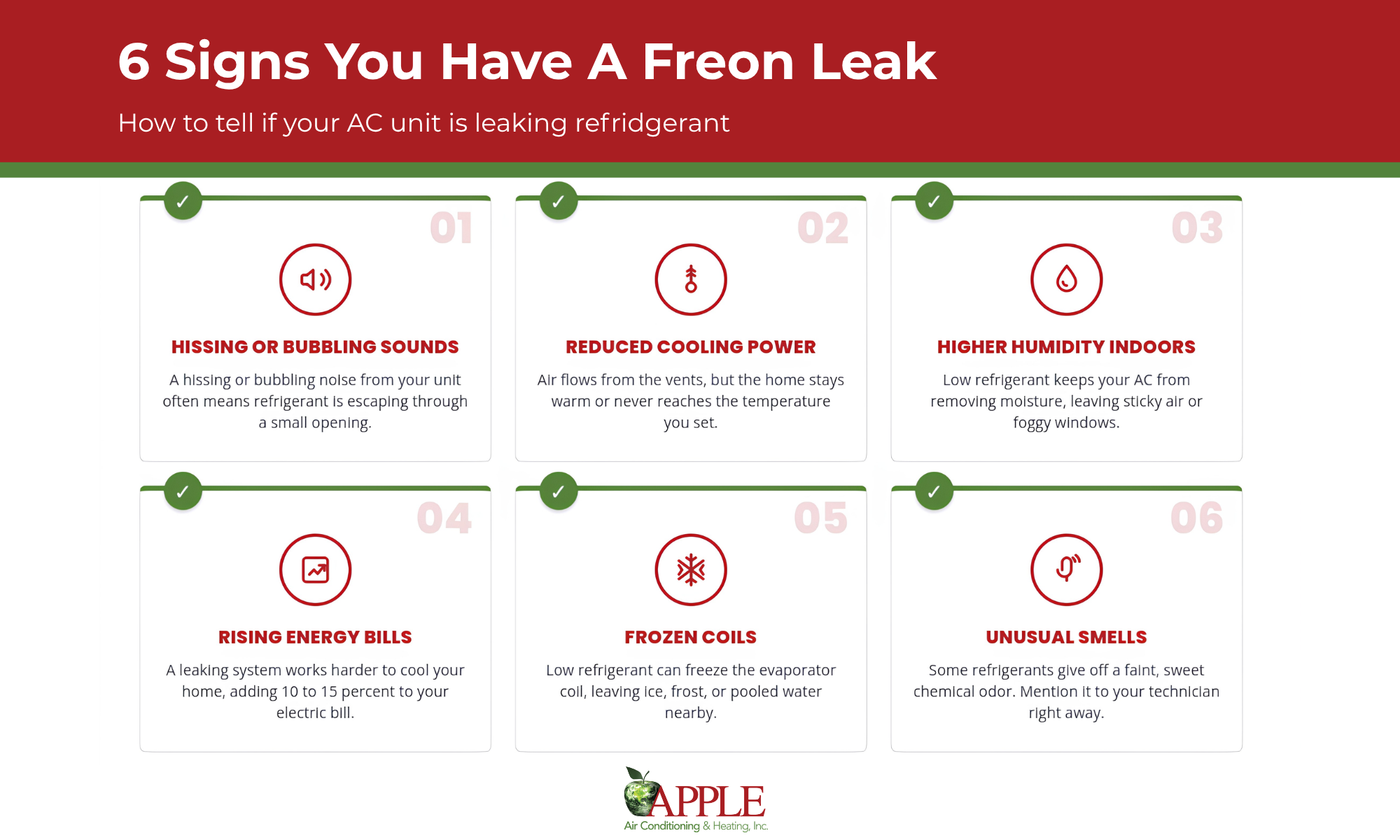
6 Ways to Tell If You Have a Freon Leak
Bubbling or Hissing Sounds
A hissing or bubbling noise coming from your outdoor unit or indoor air handler is often the first hint of a refrigerant leak. The sound comes from refrigerant escaping through a small opening in the line or coil. If you hear these unusual noises, your system needs professional attention soon.
Reduced Cooling Power
This is the most obvious sign. Your AC runs, air flows from the vents, but your home stays filled with warm air instead of the cool air you’d expect. You might notice the system never reaches the temperature on your thermostat, or it takes much longer than usual. If multiple rooms cool unevenly, a leak could be causing uneven refrigerant distribution.
Higher Humidity Indoors
Freon doesn’t just cool air, it also removes moisture. When refrigerant levels drop, your AC can’t dehumidify effectively. You might notice sticky air or condensation on windows and mirrors, even with the AC running constantly.
Rising Energy Bills
A leaking system has to run longer and harder to cool your space. This shows up on your electric bill. If your usage jumps without a change in your cooling habits, have your system inspected. Research on systems running low on refrigerant found efficiency losses of 10 to 20%,.
Frozen Coils
Low refrigerant can actually cause indoor coils to freeze. The evaporator coil gets too cold, and ice builds up on the outside of the unit. You might see frost or water pooling around your indoor unit. This is a serious problem that requires immediate professional repair.
Unusual Smells
Some refrigerants have a slightly sweet chemical odor. If you notice an odd smell near your AC unit, especially a chemical scent, mention it to your technician. Odor-based leak detection can help them locate the leak faster.
Should I Repair a Freon Leak or Replace the AC Unit?
When you suspect a Freon leak, you have two main options: repair the leak or replace the system.
Your HVAC technician can evaluate the leak location and estimate repair costs, then help you decide if repair or replacement makes financial sense.
Note: if your system still uses R-22 refrigerant (older units), repair costs are significantly higher because R-22 is being phased out and supplies are limited. This is one reason why replacing an older unit with an R-410A or newer refrigerant system, or even upgrading to a heat pump, can save money in the long run.
Do You Need Professional Repair For Refrigerant Leak Detection and Repair?
Safety
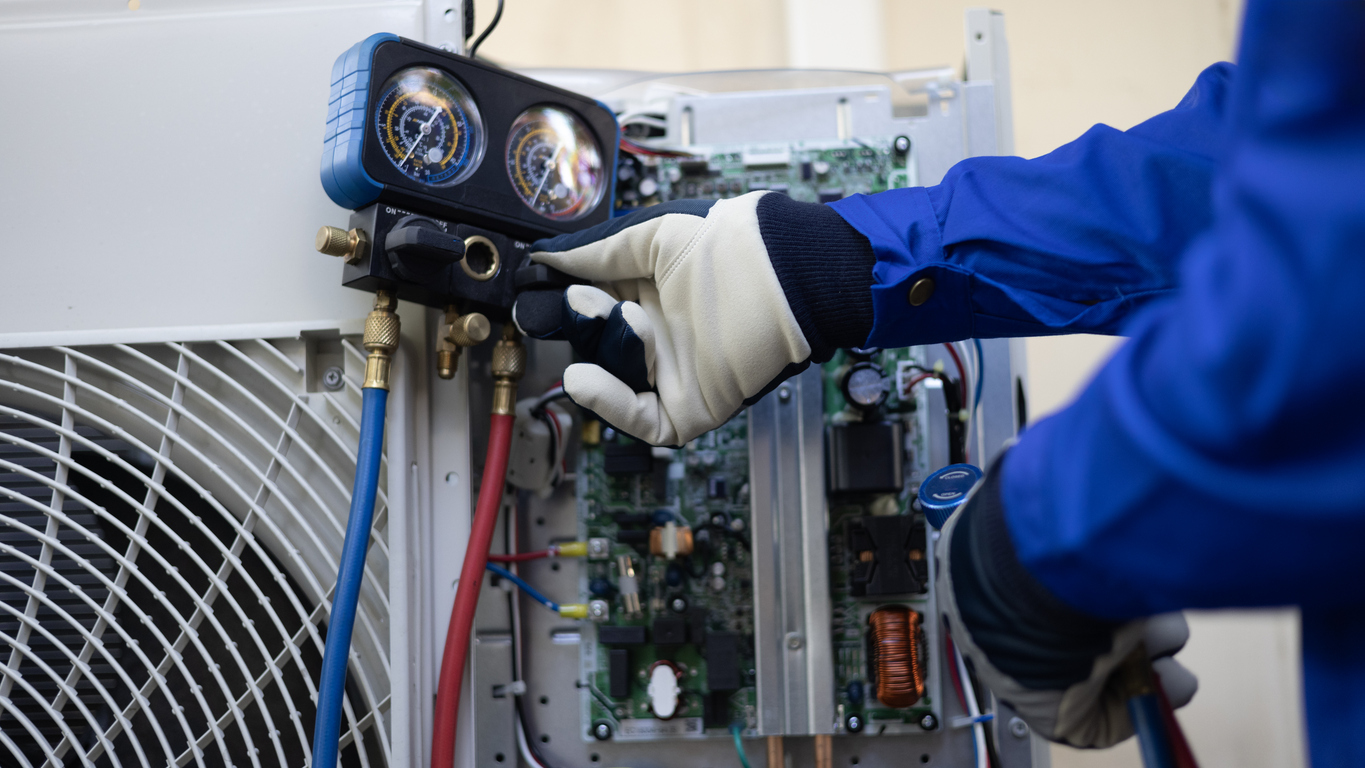
The refrigerant is under high pressure inside your system. Accidentally releasing it can cause injury. Certain refrigerants are toxic if inhaled in high concentrations. Professionals have the tools and safety equipment to handle these hazards.
Leak Detection Expertise
Refrigerant leaks aren’t always visible. Professionals use specialized leak detection equipment like nitrogen tests, fluorescent dyes, ultrasonic detectors, and electronic leak detectors to pinpoint exactly where the leak is. This saves time and prevents guesswork.
Proper Repairs and No Repeat Problems
Sealing a leak requires more than just patching a hole. The technician has to identify what caused the leak, assess if the damage is isolated or part of a larger problem, and make sure the repair will hold. Improper repairs lead to repeat leaks within weeks or months.
System Testing
After repair, your technician will add the correct amount of refrigerant, test the system under load, and verify that it’s cooling properly. This ensures the repair actually fixed the problem.
Legal Requirements
In the United States, only EPA-certified technicians can handle refrigerant. Working with AC refrigerant without certification is illegal. If someone tries to do it without proper training and certification, they’re breaking federal law and risking significant fines.
Common Questions About Freon Leaks
Can a Freon leak be prevented?
Most Freon leaks can be caught before they cause real damage, though not every leak is avoidable. Copper coils and lines wear down over years of use, and corrosion or vibration can eventually create small openings on their own. Routine maintenance catches these weak points early, often before a system loses enough refrigerant to affect cooling.
Can I just add more freon to fix a leak?
Adding refrigerant without finding and fixing the leak is like putting water in a bucket with a hole in the bottom. The refrigerant will escape again. You’ll waste money and come right back to the same problem. The leak itself must be repaired first.
How much does a freon leak repair cost?
Costs range between from $140 to $800 with the average cost around $200 depending on the severity, the leak location, and the repair needed. At Apple AC, your technician will provide a quote before starting work.
How long does a freon leak repair take?
Simple repairs take roughly 1-2 hours. More complex work like coil replacements can take up to 3-4 hours. Availability in Central Florida during the hot season can affect scheduling, so calling or reaching out to a 24/7 emergency technician as soon as you suspect a leak gets your system back working faster.
Can freon leaks cause health problems?
Modern refrigerants like R-410A are relatively safe at normal indoor concentrations, though very high concentrations can cause dizziness or discomfort and potential refrigerant poisoning. R-22 and older refrigerants carry higher health risks. Proper ventilation is important if you suspect a leak. Have your system inspected and repaired promptly.
Let Apple AC Diagnose Your System
A freon leak won’t fix itself. The longer you wait, the more damage your system suffers and the higher your energy bills climb. If you notice hissing sounds, weak cooling, frozen coils, or rising electric costs, schedule a professional inspection with an experienced HVAC professional.
Apple AC has been serving Central Florida since 1997 as your trusted HVAC company, with NATE-certified technicians available 24/7. Our HVAC professionals will accurately identify the leak, explain your repair and replacement options, and get your system back to full cooling capacity.
Call (407) 654-3777 today to schedule your AC repair inspection or request an estimate!