

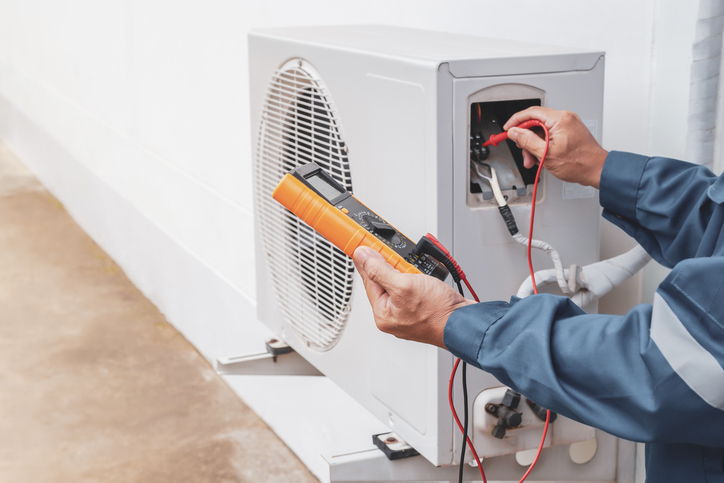
The Short Answer: Central Florida asks a lot from an air conditioner. Between the long cooling season and the humidity, your system works overtime for most of the year. HVAC preventative maintenance is how you keep that system from working against you. It is the routine inspection, cleaning, and servicing of heating, ventilation, and air conditioning systems to keep them running efficiently and avoid sudden breakdowns.
What Is HVAC Preventative Maintenance?
HVAC preventative maintenance is a set of scheduled checks and services that catch small problems before they turn into costly breakdowns. Instead of waiting for the AC to fail on a hot day in summer, a technician inspects, cleans, and adjusts the system on a regular basis so it keeps running the way it was built to.
This is different from reactive maintenance, which only happens after something breaks in an HVAC system. Reactive repairs tend to cost more, happen at inconvenient times, and often point to a problem that preventative care would have caught months earlier. Research from NIST found that improper installation and maintenance can raise household HVAC energy use by 30% or more compared to a properly maintained system.
For homeowners and business owners in Orange, Lake, Seminole, and Sumter Counties, a preventative maintenance plan is standard operating procedure for a system that rarely gets a real break. Apple AC has handled HVAC service across Central Florida since 1997, and our technicians can set up a maintenance schedule that fits how hard your system works.
Core Tasks of HVAC Preventative Maintenance
Change Air Filters
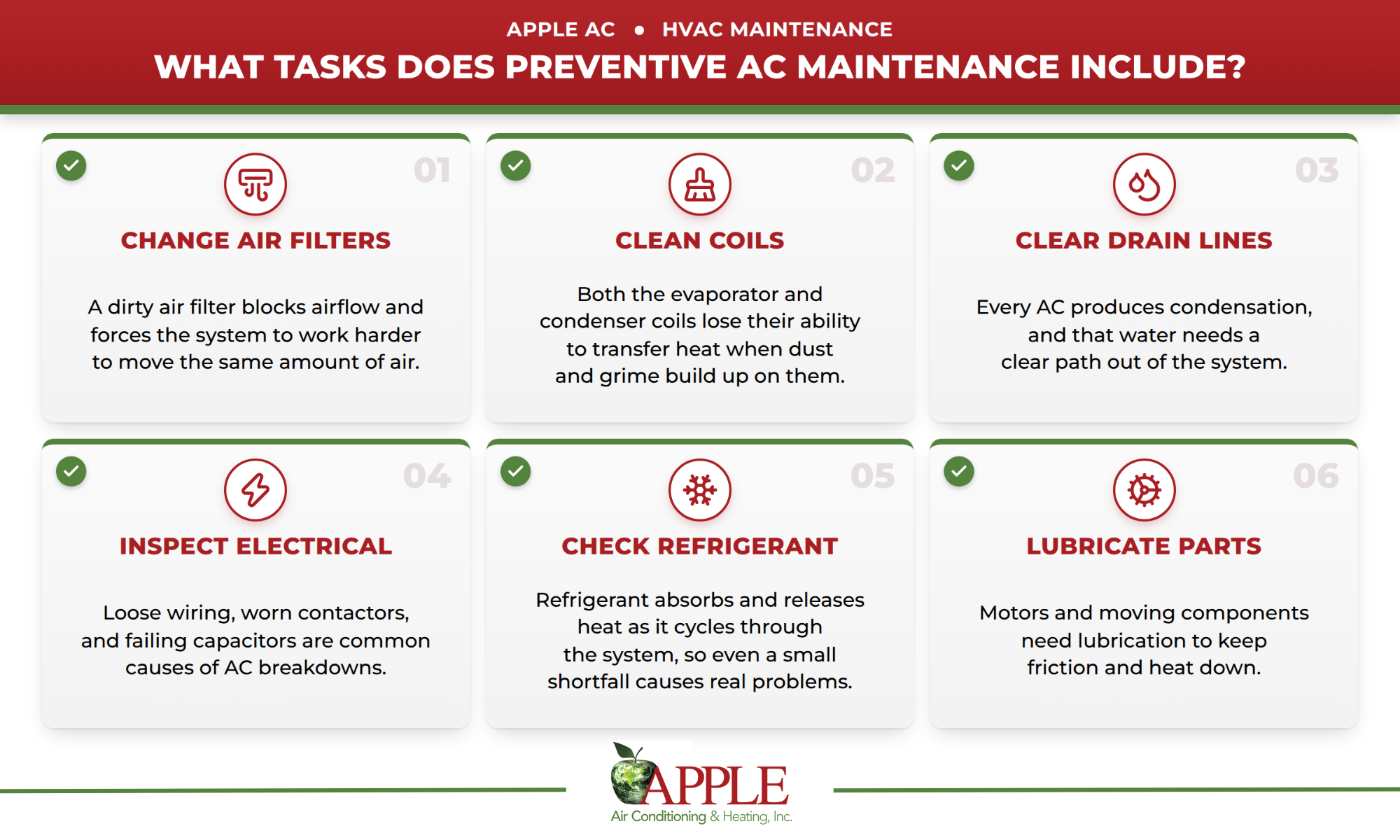
A dirty filter blocks airflow and forces the system to work harder to move the same amount of air. The Department of Energy estimates that replacing a dirty filter alone can lower air conditioner energy consumption by 5% to 15%. In Central Florida, where the AC runs most months of the year, filters usually need attention every 1 to 3 months depending on the home, pets, and filter type.
Clean Coils
Both the evaporator and condenser coils lose their ability to transfer heat when dust and grime build up on them. A Federal Energy Management Program study found that a dirty condenser coil can cut cooling capacity by 7% and raise power use by 10%.
Clear Drain Lines
Every AC produces condensation, and that water needs somewhere to go. A clogged condensate drain line can back up, trip a safety switch, or leak into a ceiling or wall. Clearing this line is a quick task during a maintenance visit and one of the easiest ways to avoid water damage inside a home or business.
Inspect Electrical Parts
Loose wiring, worn contactors, and failing capacitors are common causes of AC breakdowns. A technician checks connections, tests capacitor readings, and looks for signs of corrosion or overheating. Catching a weak capacitor during a routine visit costs a lot less than replacing the compressor it eventually fails.
Check Refrigerant Levels and Inspect for Leaks
Refrigerant does the work of absorbing and releasing heat as it cycles through the system, and even a small shortfall causes real problems. Research from RMI shows that even a 10% drop in refrigerant charge lowers system efficiency, and field studies find many home systems running about 15% undercharged. A technician checks refrigerant pressure against manufacturer specs and looks for signs of a slow leak, which often shows up as ice on the coil or a system that runs longer than it used to.
Lubricate Moving Parts
Motors and other moving components need lubrication to keep friction and heat down. Without it, parts wear out faster, and the system uses more energy to do the same job. This is a small task now can save you from a failed motor later.
Why Is HVAC Preventative Maintenance Important?
Lower energy costs
The Department of Energy reports that homeowners and organizations can see 5% to 20% in annual energy savings through proper maintenance practices. On a Central Florida electric bill, that adds up fast over a full cooling season.
Reduced repair costs
Small issues caught early cost less to fix than the damage they cause if left alone. A weak capacitor is about $20 to $50. A compressor it takes out with it can run into the thousands.
Fewer emergency repairs
Regular maintenance catches wear before it becomes a breakdown. The Air Conditioning Contractors of America points to routine maintenance preventing a large share of the service calls that would otherwise happen without warning, often during the worst heat of the year.
Extended system lifespan
Components that are cleaned, lubricated, and checked regularly wear more slowly. Systems that get consistent maintenance tend to run years longer than systems that don’t, which pushes back the cost of a full AC installation.
Improved health and safety
Clean coils and clear drain lines leave less moisture sitting inside the system, so mold and bacteria have fewer places to grow. A well-maintained system also filters and circulates air more effectively, which makes a big difference in your indoor air quality.
Sustainability benefits
A system running at its intended efficiency uses less electricity to do the same job. That’s lower energy demand and a smaller footprint for a home or business, without changing how the AC gets used day to day.
How to Build a Structured Maintenance Schedule
Preventative maintenance works best as a routine, not a one-time event. Some tasks are simple enough to handle between professional visits. Others need a trained technician with the right tools and gauges.
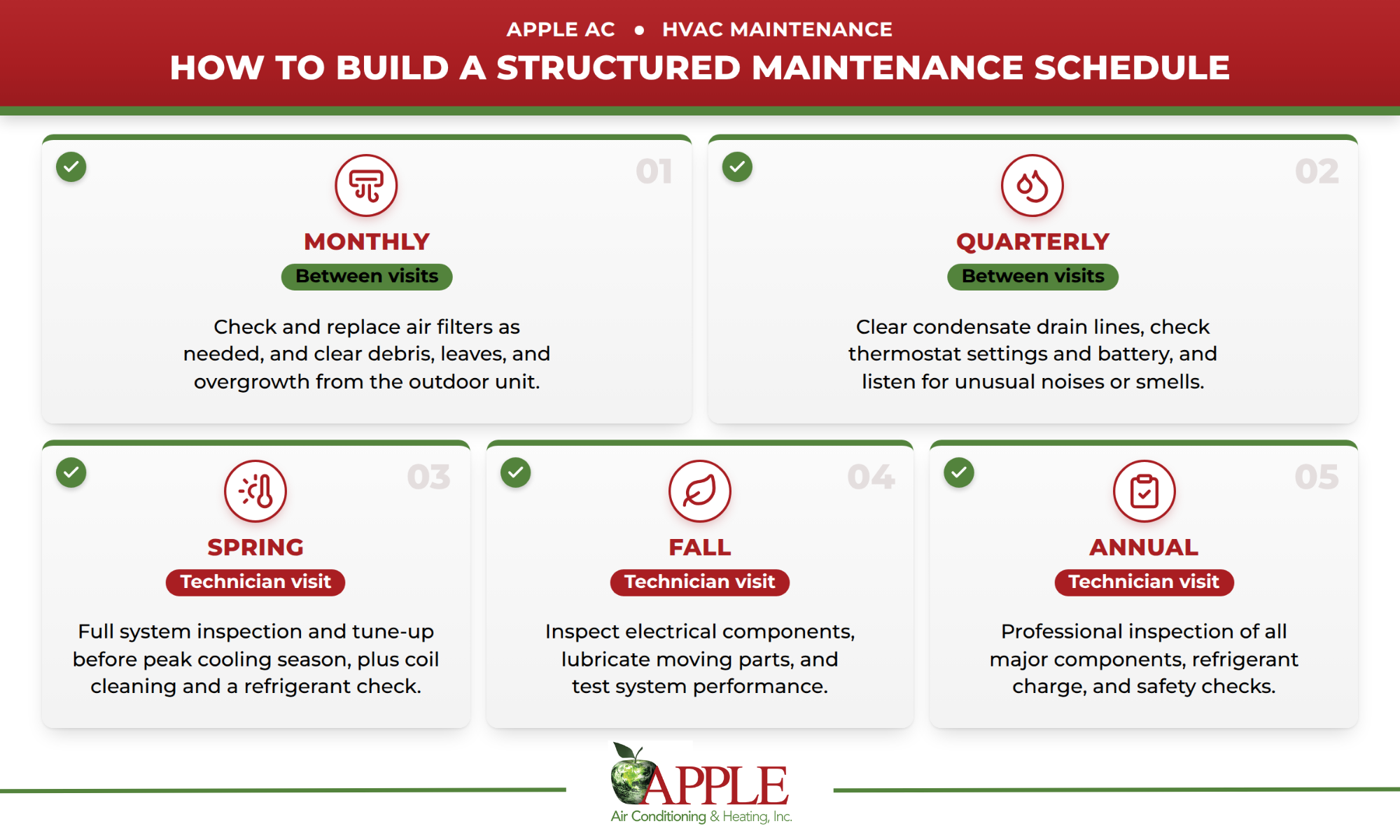
Central Florida’s climate means the “off season” for AC maintenance is short. Scheduling a spring tune-up ahead of the heaviest cooling months and a fall check to catch anything the summer wore down covers most homes and businesses in the region.
Do You Need Professional Repair?
Some maintenance tasks are safe and simple for a homeowner or business owner to handle. Others are risky without proper training, especially anything involving refrigerant or electrical components.
Professional vs. DIY Care
| Task | DIY | Professional |
|---|---|---|
| Changing air filters | Yes | Yes |
| Clearing debris from outdoor unit | Yes | Yes |
| Checking thermostat settings | Yes | Yes |
| Cleaning coils | Light cleaning only | Deep cleaning, delicate fins |
| Checking refrigerant levels | No | Requires certification and gauges |
| Electrical inspections | No | Requires training and safety equipment |
| Full system diagnostics | No | Yes |
Handling a refrigerant leak or an electrical issue without the right training is a safety risk, and in the case of refrigerant, it can violate EPA regulations. If a maintenance check turns up a problem outside of filter changes and basic cleaning, that’s the point to call a licensed technician.
How Apple AC Can Help
Apple AC has served homeowners and business owners across Orange, Lake, Seminole, and Sumter Counties since 1997. If your unit is past the 10-12 year mark and struggling to keep up, we’ll give you honest advice on whether a repair or new installation makes more sense for your budget. For qualifying customers, financing is available.
You can reach our team of NATE-certified technicians 24/7 at (407) 654-3777. Ready to make your HVAC more efficient? Contact us to schedule service or get a free estimate.