

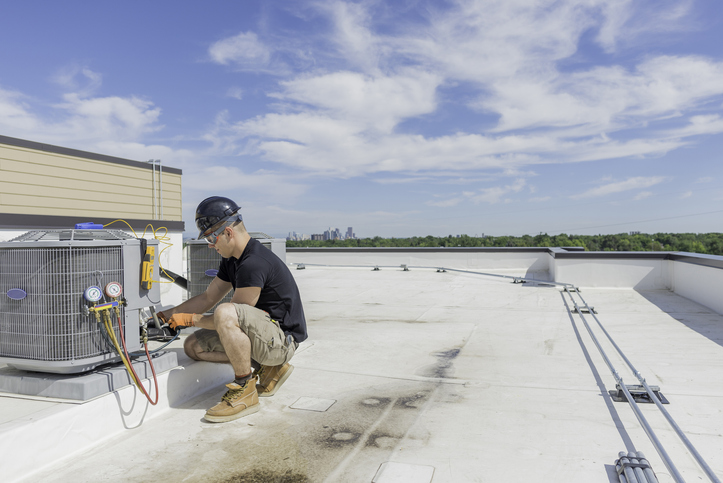
The Short Answer: A reliable commercial HVAC company helps keep your business comfortable, your equipment operating properly, and your facility ready when something goes wrong. Regular preventive maintenance can help identify problems before they become major repairs, while dependable emergency service can reduce downtime when your commercial HVAC system fails.
How Does A Commercial HVAC System Affect Your Business?
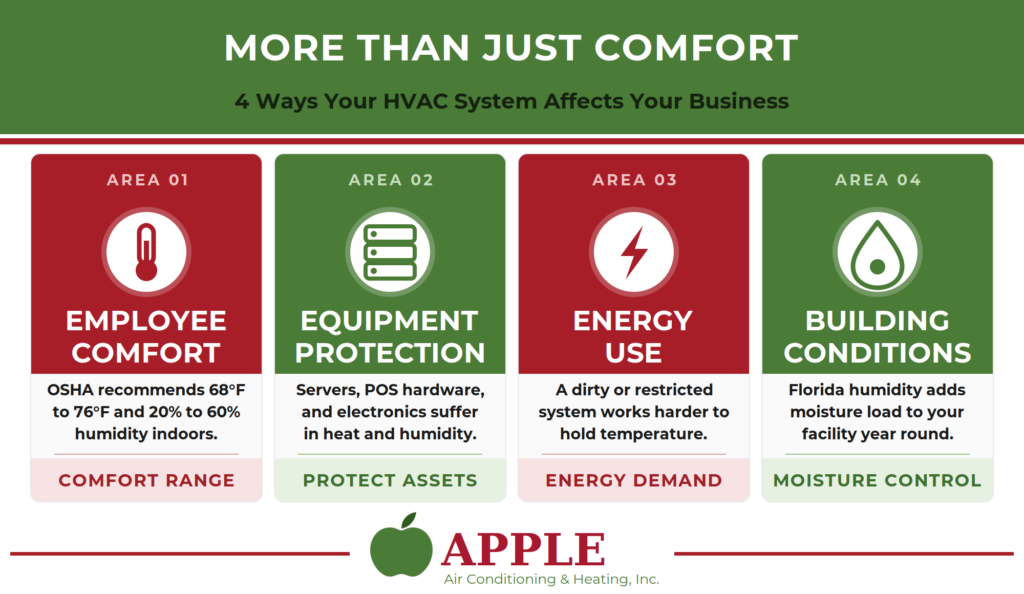
A commercial HVAC system does more than keep employees and customers comfortable. When it comes to commercial enterprises, your business is only as strong as its weakest link, and this includes your HVAC system. There are a few ways your HVAC affects your business and employees:
Employee comfort: OSHA recommends temperature control between 68°F and 76°F and humidity control between 20% and 60% for an office building. Keeping indoor conditions within a comfortable range can help create a better working environment.
Equipment protection: Server closets, point-of-sale hardware, medical equipment, and other electronics can be affected by excessive heat and humidity. Proper cooling and dehumidification help protect equipment and the people using it.
Energy use: A commercial HVAC system that is dirty, poorly maintained, or restricted by inadequate airflow may have to work harder, using more energy consumption to maintain temperature. Regular HVAC maintenance can help keep the system operating at peak performance and identify problems that may affect it.
Building conditions: Florida’s heat and humidity put additional demands on commercial air conditioning systems. Proper cooling and humidity control can help protect areas of the building from excess moisture and the problems it can cause.
What HVAC Service Technicians Can Cover for Businesses
A reliable commercial HVAC company should understand your equipment and your facility before you need emergency repair. When a service technician knows the system, its maintenance history, and the building’s needs, diagnosing a problem is more straightforward.
Preventative Maintenance To Avoid Unexpected Repairs
Preventative maintenance costs money, but so does an unexpected HVAC failure. Regular service can help identify developing problems before they lead to larger, more expensive repairs or an unplanned shutdown.
A maintenance plan gives your equipment a regular service schedule. Depending on the system, maintenance services may include filter replacement, coil cleaning, electrical inspections, refrigerant checks, drain line clearing, belt inspection, and other equipment checks. Regular maintenance also gives business owners and facility managers a better understanding of their HVAC equipment’s condition.
Here is how the two approaches compare:
| Managing | Repair as Needed | On a Maintenance Plan |
|---|---|---|
| Filters and coils | Serviced after airflow or cooling problems appear. | Checked and serviced on a regular schedule. |
| Refrigerant | Checked after cooling performance drops. | Checked during scheduled service. |
| Equipment Wear | Problems can go unnoticed between breakdowns. | Developing issues can be identified during scheduled visits. |
| Downtime | Repairs can interrupt business operations. | Potential problems may be found before they cause a shutdown. |
| Costs | Unplanned repair expenses. | More predictable maintenance costs. |
| Scheduling | You take the next available appointment. | Priority scheduling may be available. |
Emergency Repair To Limit Business Disruption
Not every HVAC problem can wait for a scheduled appointment. If your building loses cooling during business hours, a rooftop unit stops working, or a refrigeration system fails, waiting several days for repair can affect your employees, customers, inventory, or equipment. Emergency repair gives businesses a way to respond when an HVAC problem cannot wait.
You may need emergency HVAC service if:
- Your commercial building has lost cooling.
- A rooftop unit has stopped operating.
- Water is leaking from an indoor HVAC unit.
- You notice a burning smell or an electrical problem.
- Temperature-sensitive inventory is at risk.
- A critical area of your commercial facility is no longer receiving adequate cooling.
Fast service does not just restore comfort. It can help limit the amount of time your business has to operate around a failed HVAC system.
Commercial HVAC Work Requires the Right Experience
Commercial HVAC equipment is not always simply a larger version of a home’s air conditioning system. Businesses can use rooftop package units, chillers, air handlers, multi-zone systems, building automation controls, and commercial refrigeration equipment. These systems can require specialized tools and training to diagnose correctly.
A commercial HVAC repair may involve electrical components, refrigerant circuits, airflow, controls, ductwork, or several parts of the system at once. A technician needs to understand how those components interact before recommending a repair. The right service technician can troubleshoot the system rather than simply replacing the first failed component.
Commercial HVAC work can also involve local building codes and permitting requirements. Florida’s 2026 Building Code includes a mechanical volume covering requirements for mechanical systems, while local jurisdictions may have additional permitting requirements depending on the project.
Certified professionals will produce work that meets the legal standard, which can help keep you clear of fines, failed inspections, and safety findings. Federal law also requires EPA Section 608 certification for anyone who maintains, services, or disposes of equipment that could release refrigerant. Doing this work on your own can lead to legal troubles, so it’s best to leave it to the professionals.
What to Look for in a Commercial HVAC Company
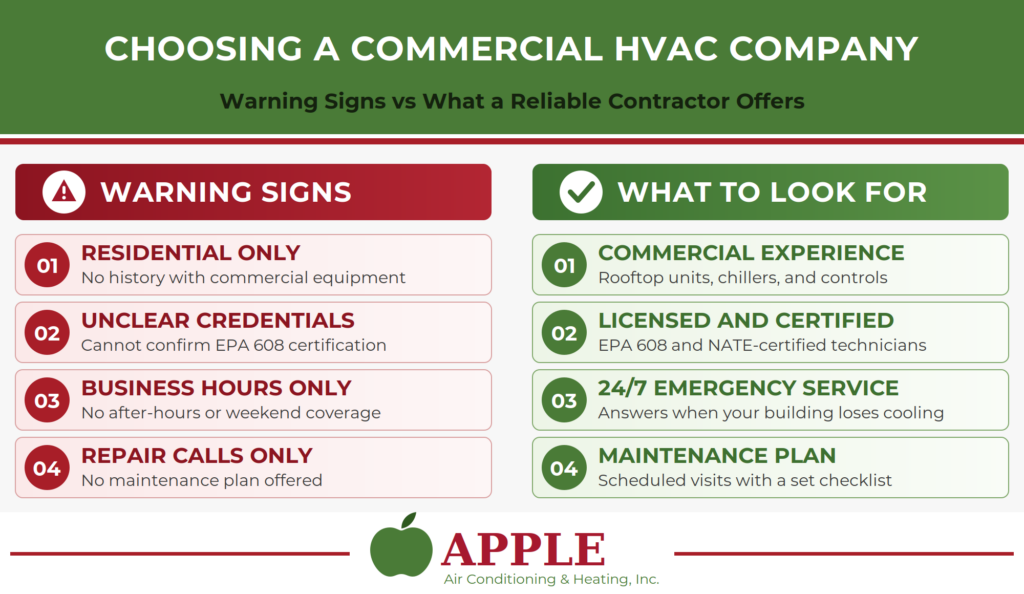
Your HVAC company may be responsible for equipment that is important to your daily operations. Find a company that can provide more than a one-time repair.
Commercial experience: Choose HVAC experts who regularly work with commercial facilities and equipment. Experience with commercial projects can be especially important when your building uses rooftop units, chillers, building controls, refrigeration, or other specialized systems.
Skilled technicians: Technicians should have the training needed for the equipment they service. Apple AC staffs NATE-certified technicians and has served Central Florida since 1997.
Licensing and certification: Commercial HVAC work can involve refrigerants, electrical systems, ventilation, gas equipment, and local permitting requirements. The contractor should have the appropriate licensing and certifications for the work being performed. EPA Section 608 certification is required for technicians who perform covered work on equipment that could release regulated refrigerants.
Emergency service: HVAC problems do not always occur during convenient business hours. If your business depends on reliable cooling, find out whether your HVAC company offers emergency repair and after-hours service.
Preventative maintenance: Ask what a maintenance plan includes and how often technicians will visit. Regular maintenance should cover the components and equipment.
Why Central Florida Businesses Choose Apple AC
Since 1997, Apple AC has provided commercial HVAC repair, preventative maintenance, emergency repair, HVAC installation, and replacement services across Central Florida. We believe in delivering the best customer service and satisfaction. You can trust our certified, trained technicians with your air conditioning needs. If your business needs reliable, exceptional service or a maintenance plan, call 407-654-3777 or fill out a form to schedule your HVAC service with us.