

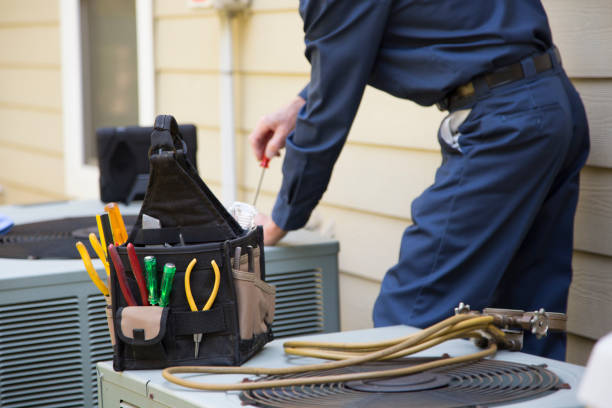
The Short Answer: Decide first whether you are repairing, replacing, or simply adding capacity. If a new AC unit is needed, work with a professional to decide the proper unit size, installation, and permitting needed for your cooling essentials.
Most homeowners don’t shop for a new air conditioner until the old one quits, and that’s a stressful time to learn how AC systems work. In Florida, where your AC runs most of the year, the stakes are higher than in most states. According to the U.S. Energy Information Administration’s 2020 Residential Energy Consumption Survey, cooling accounted for 28% of total home energy use in Florida, compared with 9% nationally. Equipment here runs about nine months a year, so a bad decision follows you around on your energy bills for the next 15 years.
6 Things to Know Before Your New AC Installation
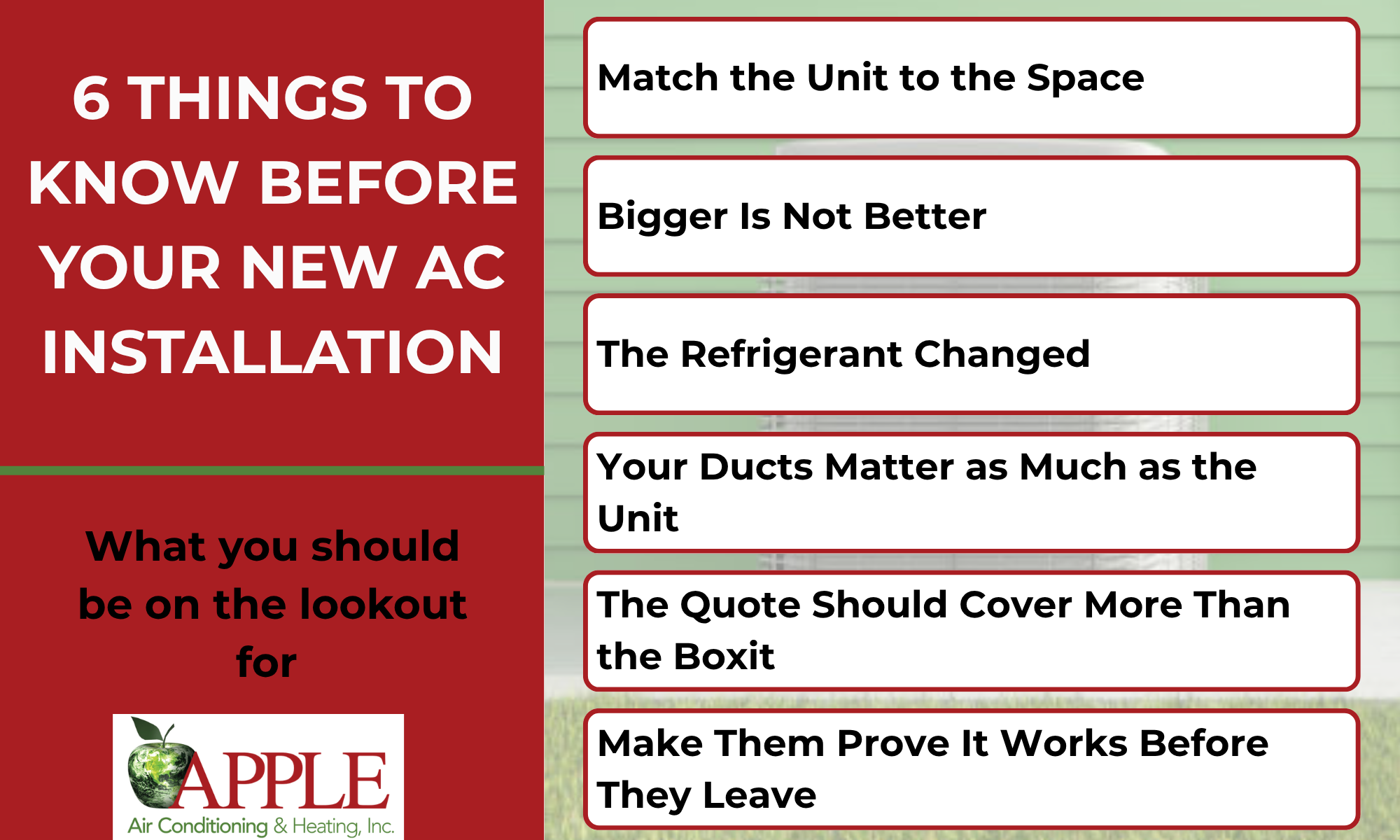
1. Match the Unit to the Space
There are three practical choices, and they are not really competing with each other. Each one fits a different job.
Type | Pros | Cons | Best for |
Window AC | Cheapest to buy, no ductwork, plugs into a normal outlet, and you can install it yourself | Cools one room only, blocks a window, noisy, weak on humidity | A bedroom, home office, or workshop that runs hot |
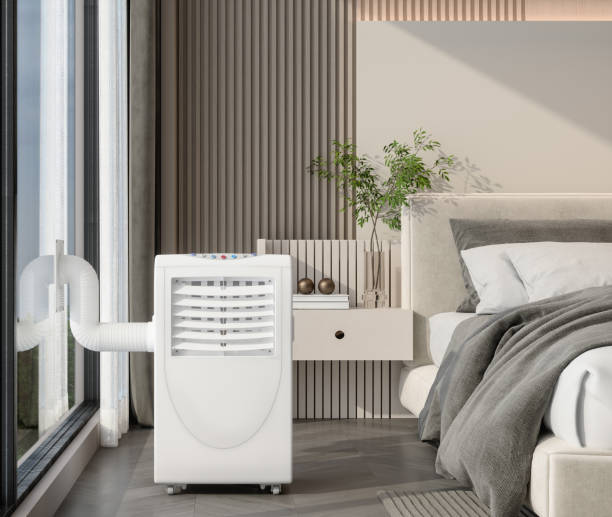
Portable | Easy to move, no window bracket, works where a window unit will not fit | Least efficient, takes up floor space, needs a drain, sold with inflated capacity numbers | Temporary cooling, rentals, spaces you cannot modify |
Central AC | Cools and dehumidifies the whole house, quiet, one thermostat, best long-term efficiency | Highest upfront cost, needs ductwork, requires a permit and a licensed installer | Any whole-home cooling in Central Florida |
Window Units
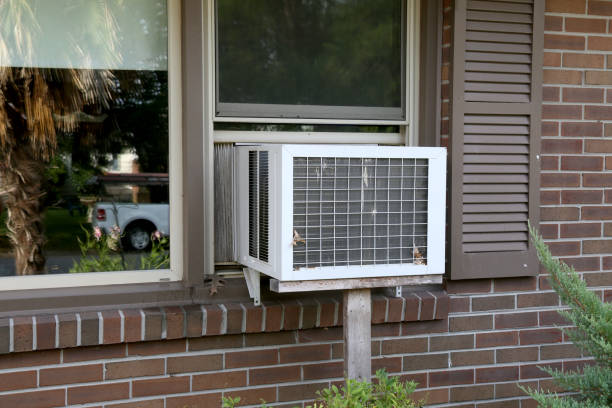
Standard window air conditioners cool a single room and don’t require ductwork or a permit to install. They’re the most affordable option and a good fit for a detached office, a workshop, an apartment, or a spare bedroom that runs warm.
Humidity is where window units fall short. In a small room, a window AC tends to cycle on and off quickly, and those short run times pull less moisture out of the air. In a Florida summer, that can leave the room cool but still clammy.
Please be sure to note the window type and manufacturer’s instructions before purchase and installation. The shape and build of your window frame, such as storm windows or vinyl windows, might slightly change the way an air-conditioning unit sits. Ensure units have proper support and support brackets to prevent window damage and warping.
Note: An AC system placed in a fire escape window is dangerous and often violates laws and building codes.
Portable Units
Central Air Conditioner (Central AC)
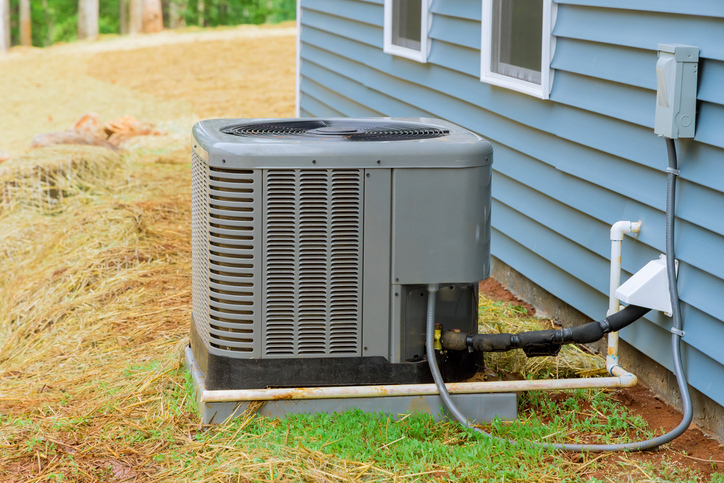
Central systems deliver cool air through a duct network and dehumidify an entire building at the same time, which is why 90% of Florida homes with air conditioning use one. In most Central Florida homes, the equipment is a heat pump paired with an air handler, so one system covers summer cooling and energy-efficient heating during the mild winter.
Although the upfront cost is higher and the installation is more involved, in return you get consistent temperatures across the building and better humidity control.
2. Bigger Is Not Better
An air conditioner does two jobs at once. It drops the temperature and pulls moisture out of the air. Removing moisture takes time, and an oversized system cools the room fast, hits the number on the thermostat, and shuts off before it has done much about the humidity. You get a house that is cold and sticky at the same time and a compressor that switches on and off all day instead of running steadily.
An undersized system has the opposite problem. It runs nonstop on the hottest days and still can’t bring the house down to the set temperature, especially in the late afternoon when the heat peaks. All that extra run time adds wear and drives up your energy bill, so a smaller unit actually won’t save money.
For a central system, the right size gets decided by a load calculation, not by looking at the sticker on your old AC or by measuring the square feet (sq ft) of your home.
3. The Refrigerant Changed
Shopping for a new air conditioner means running into refrigerant names most homeowners have never heard of. Here’s what changed and why it matters.
For years, R-410A was the standard refrigerant in home AC systems. That changed with the EPA’s Technology Transitions Rule, authorized by the AIM Act, which requires new residential systems to use refrigerants with a lower global warming potential. As of January 1, 2025, manufacturers can no longer produce or import R-410A residential split systems, and new equipment now uses R-454B or R-32.
If you have an R-410A system that works well, you don’t need to replace it. It can still be serviced and recharged, so a refrigerant change alone isn’t a reason to buy a new unit. The newer refrigerants also come with their own handling and leak detection requirements that technicians need specific training for, which is one more reason to choose your installer carefully.
4. Your Ducts Matter as Much as the Unit
You can buy top-quality equipment and still get weak airflow from your vents, because the ductwork is what actually delivers the cool air. In many Central Florida homes, those ducts run through a hot attic, leak at the joints, or were sized for a system that was replaced years ago.
Leaky attic ducts pull in hot, humid air and lose some of your cooled air into the attic before it reaches your living space. Undersized or crushed ducts make the blower push against more resistance than it was designed for, which reduces airflow and shortens the life of your equipment. A good HVAC technician will check the condition of your ductwork before recommending a new system, not just quote you a replacement.
5. The Quote Should Cover More Than the Box
A cheap quote is usually cheap because something got left off. A complete quote for a central AC installation should account for the following.
The refrigerant line set, and if it is being reused or replaced
Electrical work, including the disconnect and the correct breaker size
Condensate drain lines, a float switch, and a secondary drain pan
Any duct repairs, sealing, or resizing the system needs
The equipment pad, hurricane straps, or air handler platform work
Thermostat and controls
Permit fees and the inspection
Hauling away and disposing of the old AC
The load calculation paperwork, which runs about $300 to $650 in Florida when a licensed engineer prepares it
Compare quotes line by line rather than by the number at the bottom. Two quotes $3,000 apart often turn out to be two different projects.
6. Make Sure the System Is Tested Before the Crew Leaves
How your system is installed affects its performance more than the efficiency rating on the label. A high-efficiency unit with the wrong refrigerant charge or restricted airflow can perform worse than a basic unit that was installed correctly.
A good installation crew tests the system before packing up. They should check static pressure, measure the temperature drop across the coil, confirm the refrigerant charge, test the condensate safety switch, and set the airflow to match your home’s design. Ask the crew to walk you through their readings. A team that did the job right will be glad to show you.
Once the install is done, don’t forget to register your new air conditioner with the manufacturer. Many brands require registration within 60 to 90 days to activate their extended parts warranty. It only takes a few minutes, and skipping it could leave you with a shorter warranty than you paid for.
What Else to Consider With a Central AC
Central AC Sizing
Proper sizing isn’t optional in Florida. The Florida Building Code requires heating and cooling equipment to be sized using ACCA Manual S, based on a load calculation done with ACCA Manual J or another approved method. A Manual J calculation looks at your actual home, including insulation, window area and glazing, duct location, air leakage, and which direction the house faces. A rule of thumb like one ton per 500 square feet won’t meet that standard, and neither will simply matching your old unit’s size.
Energy-Efficient HVAC Equipment
Florida has a legal minimum efficiency for new air conditioners. The state falls in the Department of Energy’s Southeast region, which has stricter standards than northern states. Split-system air conditioners under 45,000 BTU must meet at least 14.3 SEER2, and systems at 45,000 BTU and above must meet at least 13.8 SEER2. The rule is based on the installation date, not the manufacture date, so a unit that doesn’t meet these minimums can’t be installed in Florida, even if it was built before the standards took effect. Meeting the minimum is only the starting point, and Apple AC’s SEER calculator can show you how much a higher-efficiency system could save on your cooling costs each year.
Central AC Budgeting
Budget realistically
Florida pricing guides for 2026 put a standard 3-ton replacement at the state’s minimum efficiency at roughly $6,500 to $10,500 installed. The final number depends on tonnage, efficiency level, duct condition, and how easy the equipment is to reach, and higher-efficiency systems cost more upfront. The federal Section 25C tax credit ended for equipment placed in service after December 31, 2025, so a quote that still subtracts it is using outdated information. Utility rebate programs are separate and worth a call to your provider.
Hire a licensed contractor and make sure they pull a permit
Florida Statutes Chapter 489 governs contractor licensing, and anyone who handles refrigerant needs EPA Section 608 certification. Unpermitted work often comes back to cause problems later, such as when you sell the home or file an insurance claim.
Consider a heat pump
Heat pumps are a common choice in Central Florida, since one system handles cooling in the summer and efficient heating through the mild winter. A variable-speed or two-stage system is also worth asking about. These systems run longer, gentler cycles, which pulls more moisture out of the air than a bigger single-stage unit would.
What Does the Installation Process Look Like?
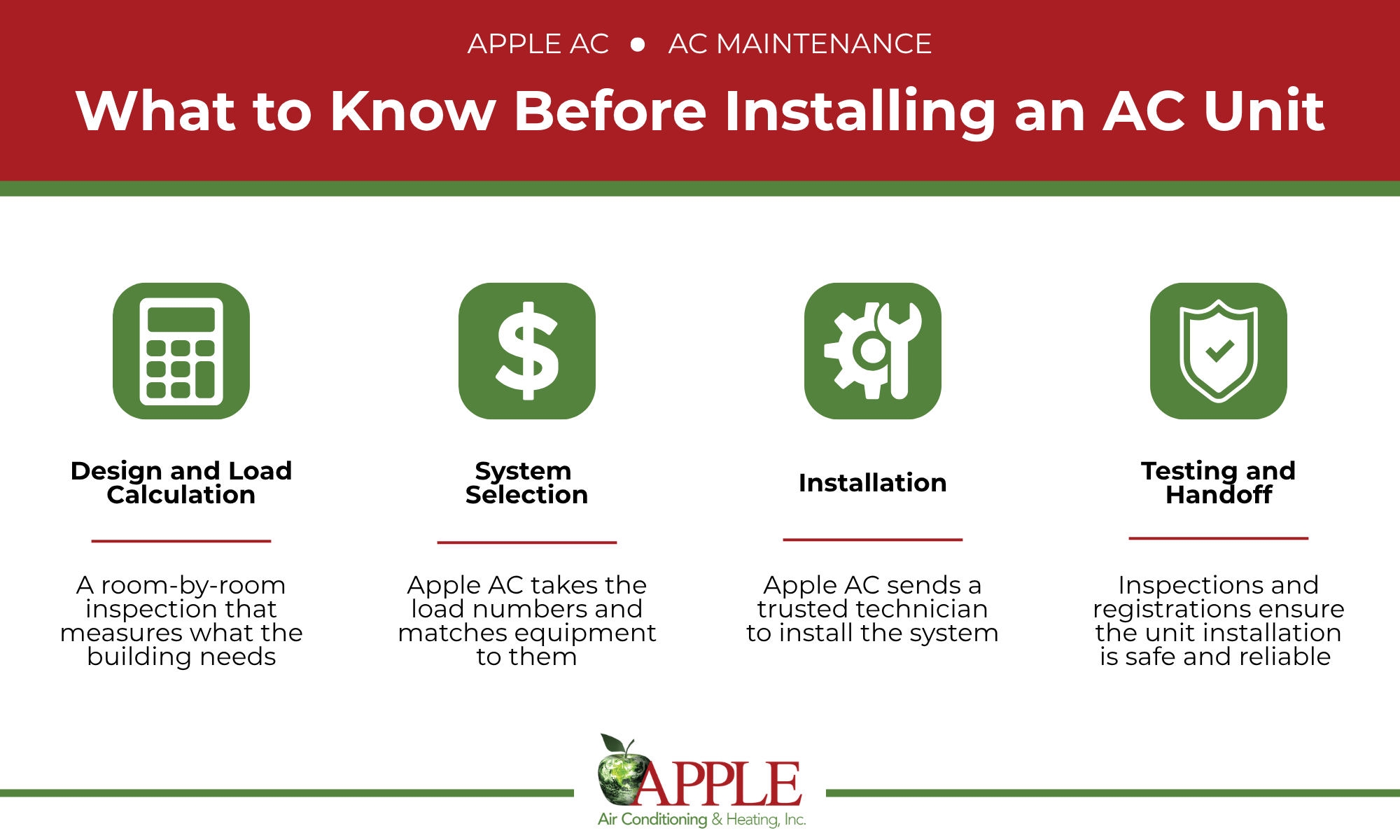
Design and Load Calculation
The job starts with a room-by-room inspection that measures what the building needs, accounting for insulation, duct location and leakage, window area and glazing, orientation and occupancy. Getting this right before anything is ordered prevents an oversized system and the humidity problems that follow.
System Selection
Apple AC takes the load numbers and matches equipment to them. This is where you weigh single-stage against two-stage and variable-speed equipment, since longer, lower-capacity run cycles remove more moisture than a single-stage unit cycling on and off. We help you choose energy-efficient HVAC equipment that fits the building and the budget, with honest guidance on your cooling, heating, and ventilation options.
Installation
The work permit gets pulled first, then old refrigerant is recovered under EPA rules, and the existing equipment is removed. Crews set the new pad or platform, run or flush the line set, complete the electrical and condensate work, connect the ductwork, pull a vacuum, and weigh in the refrigerant charge to the manufacturer’s specification.
Testing and Handoff
Commissioning verifies the installation. Technicians check total external static pressure, measure the temperature split across the coil, confirm superheat and subcooling, test the condensate safety switch, and set airflow to the design number. The building inspector reviews the work, and your new air conditioner gets registered with the manufacturer.
Note: Most brands require within 60 to 90 days to activate the longer parts warranty.
Get a Professional Installation With Apple AC
You can install a window unit yourself, but a central system is a different story. Florida law requires a licensed contractor for the work, anyone handling refrigerant needs federal certification. The newer refrigerants in today’s equipment come with their own handling and leak detection rules that technicians train for. Installation quality matters just as much as the equipment. A high-efficiency system with the wrong refrigerant charge, restricted airflow, or leaky duct connections can perform worse than a basic unit that was installed and tested correctly.
Apple AC has served Orange, Lake, Seminole, and Sumter Counties since 1997, with NATE-certified technicians who handle every installation. If you’re planning an AC installation in Central Florida, contact us to schedule service, or call 407-654-3777 with any questions.